
How to Create a Plastic-Free Pantry on a Budget
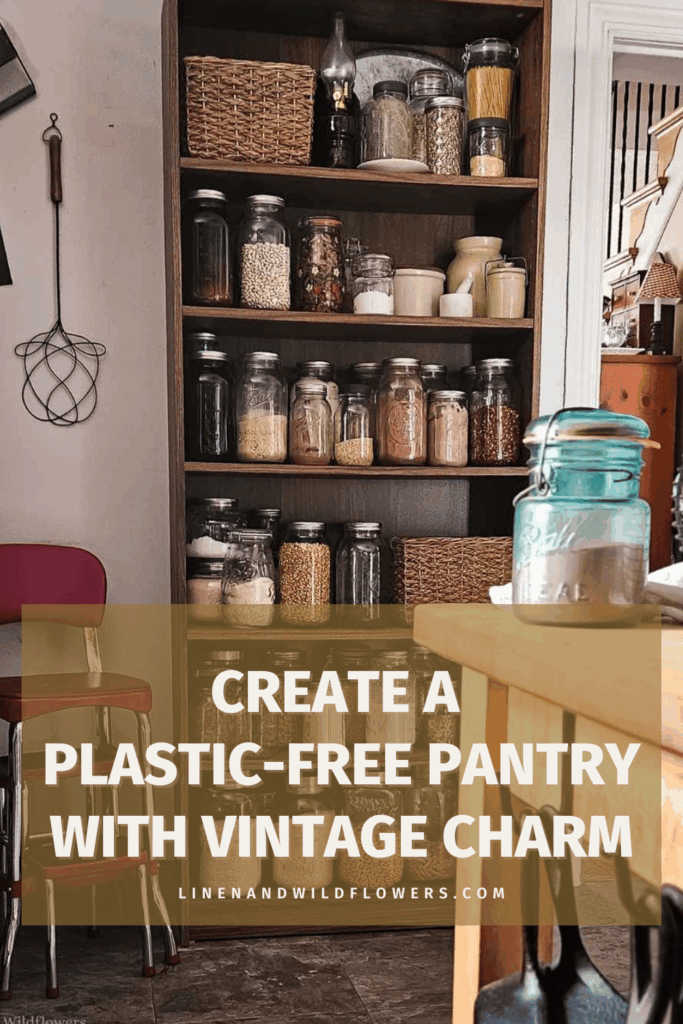
Have you ever opened your pantry and realized just how much plastic is in there? Plastic bags, plastic containers, food packaging, storage bins… it can add up quickly.
I’ve been slowly working toward a more plastic-free pantry over the last few years, and I’ve discovered that it doesn’t have to be expensive or complicated. It’s been a gradual process of making small changes whenever I can, rather than trying to change everything at once.
In fact, some of my favorite pantry storage pieces are things I’ve found while thrifting, antiquing, or simply repurposing things I already had around the house.
I love taking an old jar or vintage container you would otherwise toss and giving it a useful purpose in my pantry. Creating a plastic-free pantry isn’t about throwing everything away and starting over.
It’s about making small, intentional changes over time and choosing reusable materials whenever it makes sense. And if you love old-fashioned kitchens and vintage charm as I do, you’ll find that glass jars, crocks, baskets, and vintage containers can make a pantry both practical and beautiful.
Plastic-Free Doesn’t Mean Perfect
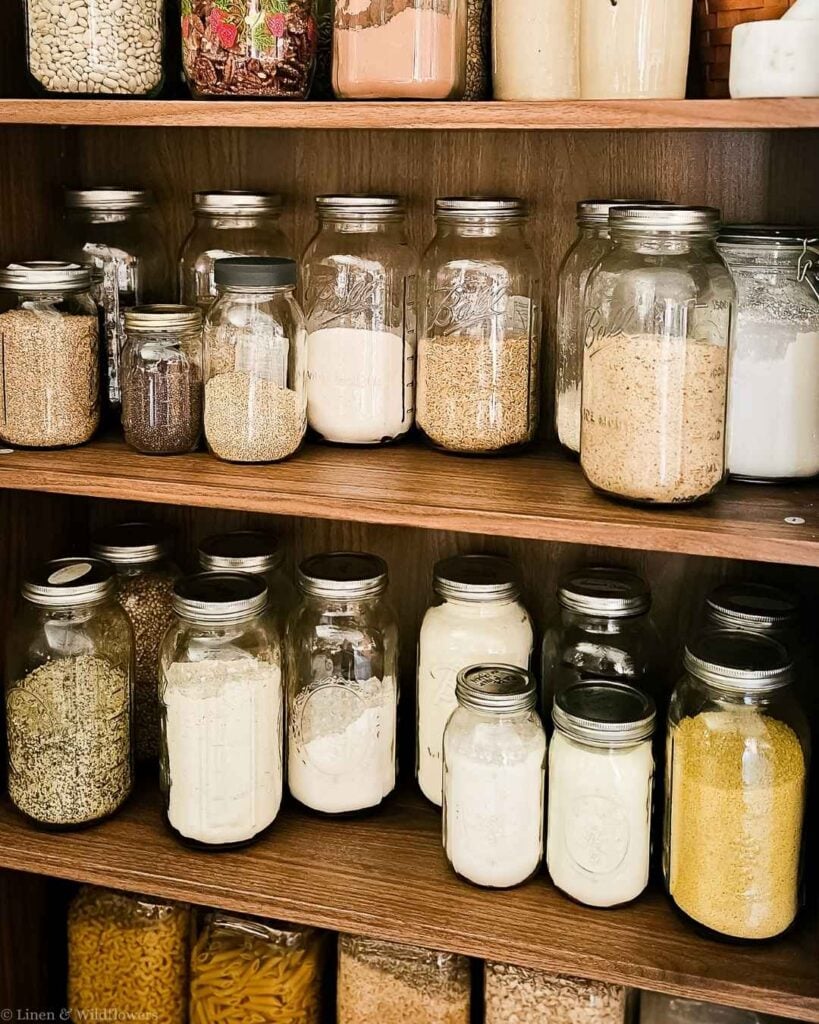
I don’t believe creating a plastic-free pantry means achieving perfection. There will probably still be plastic in your pantry, and that’s okay. This isn’t about throwing away perfectly good things or feeling guilty about what you already own. It’s about making better choices when you can.
Why Create a Plastic-Free Pantry?
There are several reasons you may want to reduce the amount of plastic you use for pantry storage.
1. Glass can be reused again and again
One of my favorite things about glass storage containers is that they are made to last. A good glass jar can be washed, reused, and passed along for years.
Instead of constantly replacing disposable storage bags or worn-out plastic containers, you can use the same jars for flour, sugar, rice, pasta, beans, oats, and other dry goods.
The USDA notes that dry foods such as rice, cereal, pasta, and dried mixes can be stored in airtight plastic or glass containers to protect them from moisture and pests.
2. You can see what you have
Clear glass makes it easy to see what’s in your pantry. I love being able to glance at a jar and immediately know whether I’m running low on flour, sugar, oatmeal, or pasta. It also makes the pantry feel less cluttered because everything has a place.
3. Glass doesn’t hold onto odors the same way some plastics can
Have you ever stored something strongly flavored in a plastic container and then struggled to get the smell out? Glass is nonporous, which makes it a lovely choice for storing many dry pantry staples.
4. It can make your pantry feel more intentional
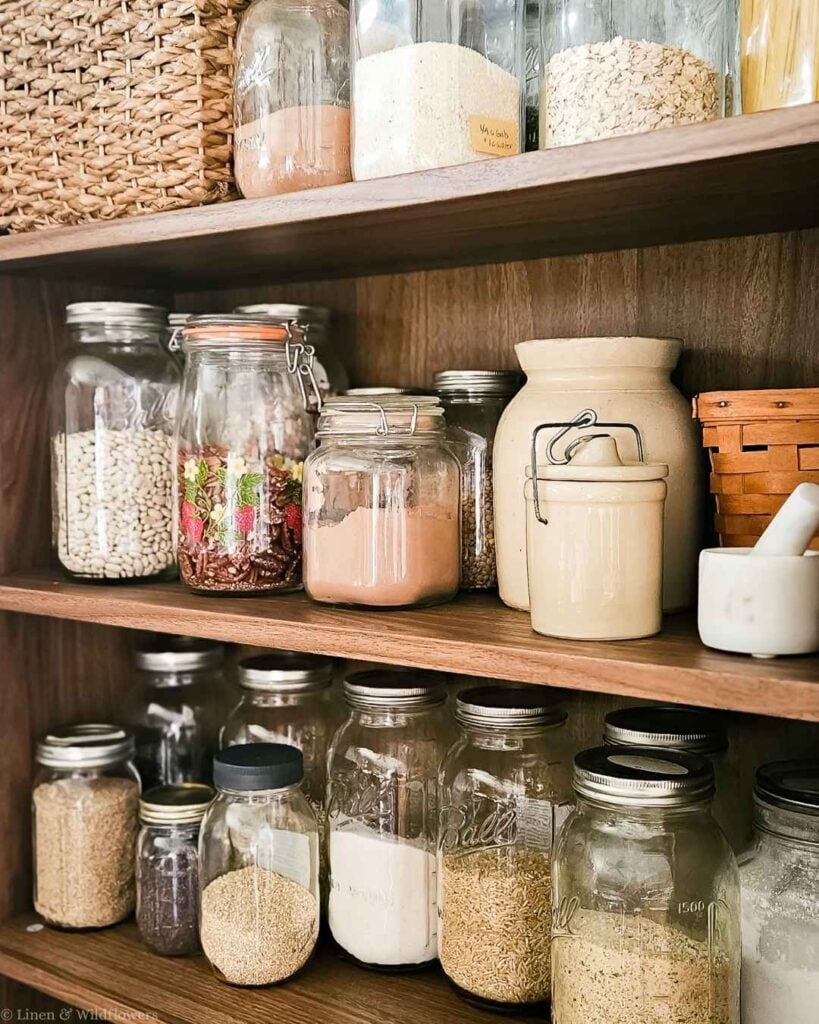
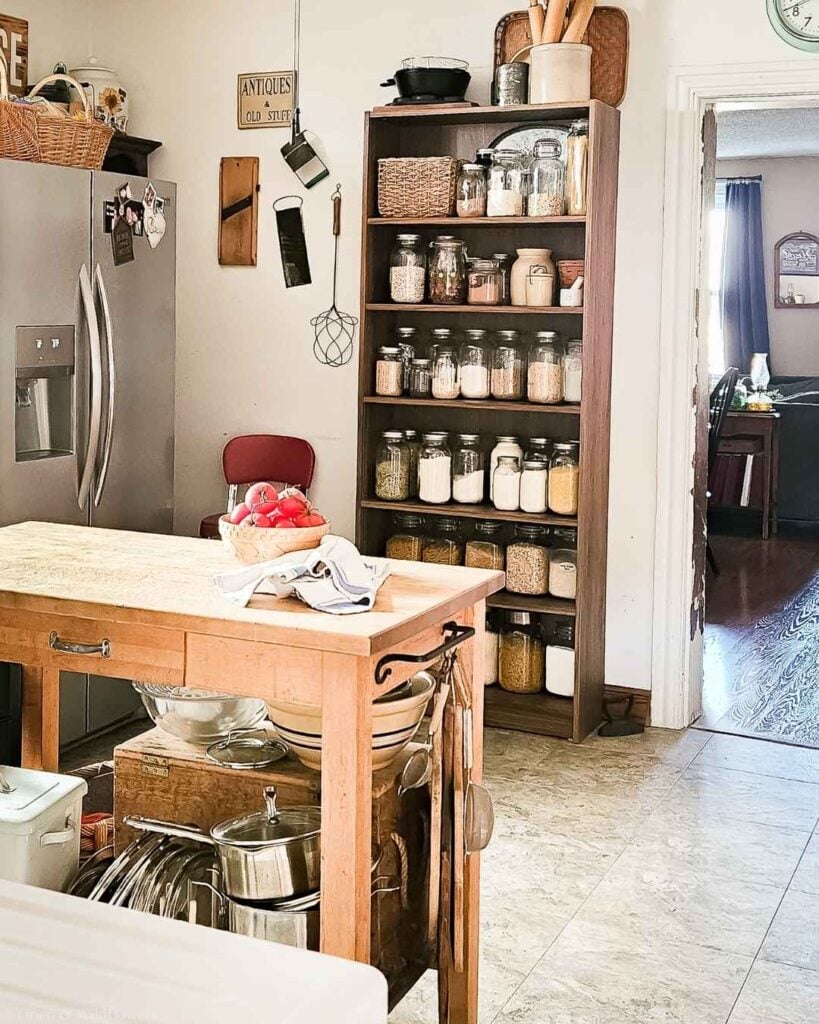
Let’s be honest, pretty pantry storage makes me happy! There’s something about rows of glass jars filled with flour, beans, pasta, and grains that gives a pantry that old-fashioned, collected feeling.
And the best part? You don’t need a perfectly matching set. I actually think a mixture of vintage jars, Mason jars, thrifted containers, and newer glass storage makes a pantry feel much more interesting.
5. You’re using fewer disposable storage materials
A plastic-free pantry can help you rely less on single-use and disposable plastic storage. But remember, you don’t have to become completely plastic-free overnight. Every little change counts.
Start With What You Already Have
This is probably my biggest tip for creating a plastic-free pantry on a budget. Don’t start by shopping. Start by looking around your own home. Before buying a dozen new containers, see what you already have.
You may have:
- Mason jars
- Glass food jars
- Glass baking dishes
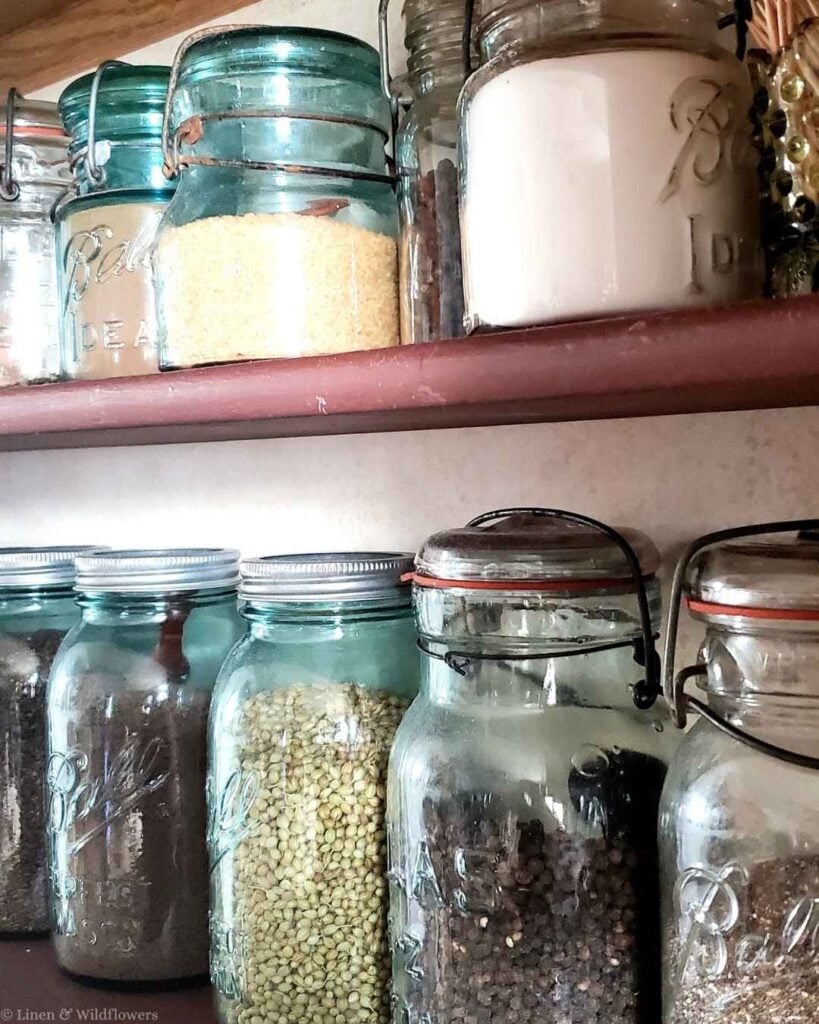
- Old-fashioned storage jars
- Vintage canisters
- Crocks
- Glass bottles with wide openings
- Metal tins
- Baskets
- Wooden boxes
You may be surprised by how many things you can repurpose for pantry storage.
And if you don’t have enough glass containers, that’s when the treasure hunt begins!
What I Keep in Glass Containers
I’ve slowly transitioned many of the pantry staples I use most often into glass containers. I don’t transfer everything, but I find the foods I reach for regularly benefit most from being stored in clear jars.
Some of the things I keep in glass containers include:
- Flour
- Sugar
- Brown sugar
- Oats
- Rice
- Pasta
- Dried beans
- Lentils
- Breadcrumbs
- Nuts
- Seeds
- Chocolate chips
- Dried fruit
- Baking ingredients
- Spices
- Tea
I especially love using glass for my baking staples because I can see at a glance when I’m running low. Since I’m more of a baker than a cook, having flour, sugar, oats, chocolate chips, and other baking ingredients right where I can see them makes things so much easier when I’m ready to bake.
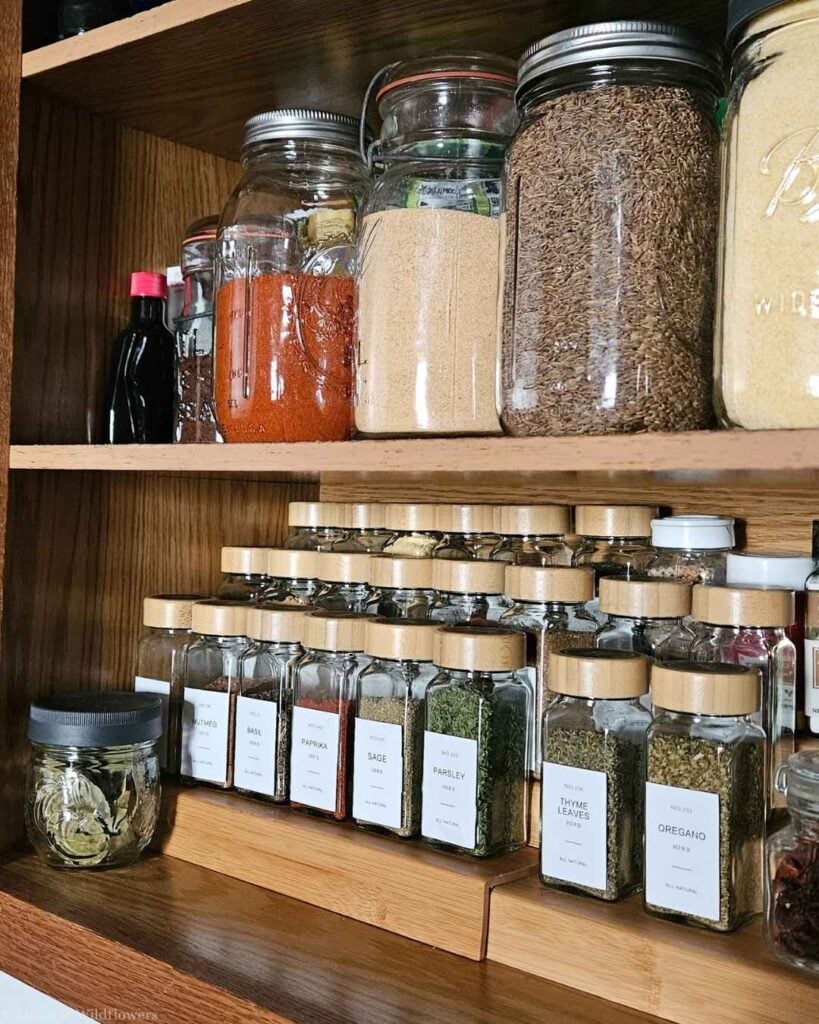
Glass containers are also wonderful for ingredients that come in smaller quantities. Small Mason jars or vintage glass jars work beautifully for spices, seeds, dried herbs, and other little pantry staples.
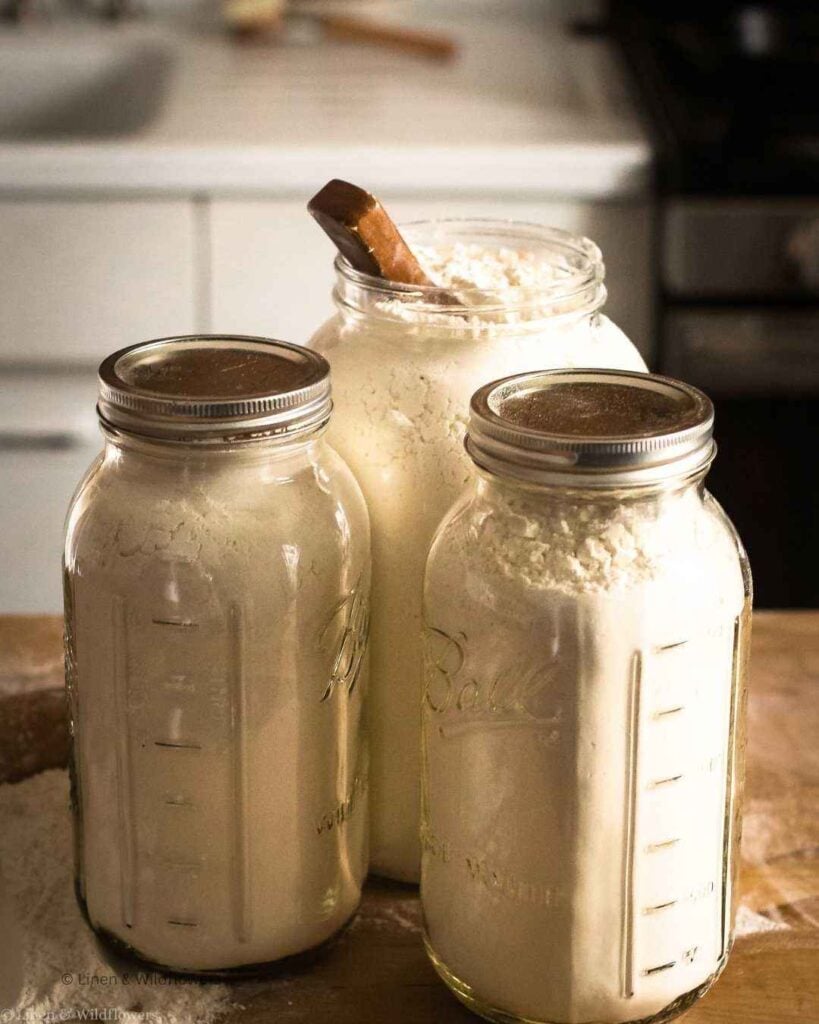
People can get caught up in the idea that a “Pinterest-perfect” pantry means everything needs to be decanted into glass jars. Of course, you don’t have to transfer everything into glass.
I still keep some foods in their original packaging, especially things we use quickly or foods that don’t really benefit from being transferred. The goal isn’t perfection; it’s simply finding ways to make your pantry more practical and reduce the plastic you use over time.
Use What You Have Before Buying New
Before you buy a beautiful set of matching glass containers, take a look around your home. You may already have jars, canisters, baskets, crocks, or other containers that you can put to work in your pantry.
This is one of the things I’ve learned over the years: you don’t have to buy something new to create a beautiful and useful pantry. Sometimes the perfect storage container is already sitting in a cabinet, tucked away in a basement, or waiting to be discovered at a thrift store.
I especially love repurposing glass jars from foods we’ve already used. Once they’re cleaned and in good condition, they can have a whole new purpose: storing pantry staples, baking ingredients, or smaller items.
And don’t worry about everything matching. A collection of Mason jars, vintage glass containers, old crocks, and a few newer pieces can actually give your pantry much more character than a perfectly matched set.
Before spending money on new storage, ask yourself:
- Do I already have something that will work?
- Can I repurpose a jar or container I already own?
- Can I find what I need secondhand?
- Will I actually use the container I’m considering buying?
Creating a plastic-free pantry on a budget is really about using what you have first, buying thoughtfully when you need something, and making small changes over time.
Where to Find Glass Containers on a Budget
You certainly don’t need to spend hundreds of dollars on matching pantry containers. Some of the best places to find affordable glass storage are surprisingly simple.
Thrift Stores
Thrift stores are one of my favorite places to look. Check the kitchenware section for:
- Glass jars
- Mason jars
- Canning jars
- Vintage canisters
- Glass storage containers
- Vintage bottles
- Glass measuring containers
- Small glass bowls
Don’t worry if everything doesn’t match. A collected look is much more charming than a pantry that looks like it came straight out of a showroom. Just inspect thrifted glass carefully for chips, cracks, or damage before using it for food storage.
Yard Sales and Estate Sales
If you love vintage treasures, don’t overlook yard sales and estate sales. Older homes often have wonderful collections of kitchen storage pieces that are inexpensive simply because someone is cleaning out a kitchen.
Look for old Mason jars, glass canisters, crocks, metal tins, and other pieces that you can put to work in your pantry.
Antique Stores
Antique stores can be another wonderful source, especially if you want your pantry to have some character. You may find vintage flour jars, sugar containers, crocks, old storage jars, and other pieces that add personality to your kitchen.
I wouldn’t necessarily fill your entire pantry with expensive antiques, though. A few special pieces mixed with inexpensive jars can give you the look without the antique-store price tag.
Amazon
Amazon is convenient when you’re looking for something specific, especially if you want a collection of similarly sized glass jars. You can find glass pantry containers in many different shapes and sizes, including jars with:
- Clamp lids
- Bamboo lids
- Wood lids
- Stainless-steel lids
- Silicone seals
- Screw-top lids
If you’re buying new, look for containers specifically intended for food storage and follow the manufacturer’s instructions for use and care.
Dollar Stores and Discount Stores
Don’t overlook your local discount stores. You can often find inexpensive glass jars, canisters, and storage containers without spending much. The selection changes frequently, so it’s worth checking the kitchen section when you’re there.
Your Local Grocery Store
Some foods come in perfectly useful glass jars already.
Think about jars from:
- Pickles
- Pasta sauce
- Applesauce
- Salsa
- Jam
- Relish
- Other pantry staples
Instead of automatically putting the empty jar in the recycling bin, wash it thoroughly and consider whether it can have a second life. Just make sure the jar and lid are clean and in good condition before reusing them.
Don’t Forget Mason Jars
Mason jars are probably one of the most useful and affordable options for a plastic-free pantry.
I especially love the larger sizes for things like:
- Flour
- Sugar
- Oats
- Rice
- Dried beans
- Pasta
- Chocolate chips
- Nuts
- Baking ingredients
Smaller jars are perfect for spices, seeds, baking decorations, and smaller quantities of pantry staples. And because Mason jars are so readily available, you can slowly build your collection as your budget allows.
Vintage Jars Are Perfect for a Collected Pantry
If you’ve been around Linen & Wildflowers for any length of time, you probably already know how much I love bringing old things into my home.
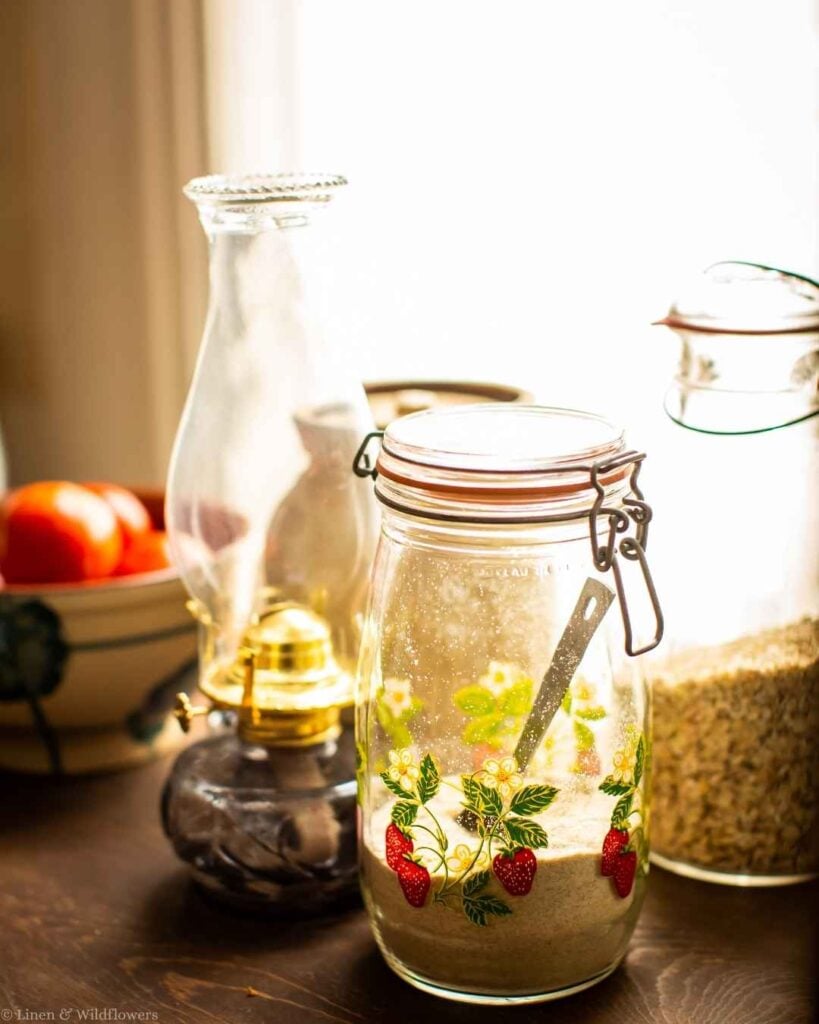
A plastic-free pantry gives you another opportunity to do just that. Look for vintage glass jars, old canisters, crocks, and other containers while you’re out thrifting.
They don’t have to be valuable antiques. Sometimes the simplest old jar becomes one of your favorite things because it has a little history. I love the idea of using something that you might otherwise have forgotten and giving it a useful purpose again.
Choose the Right Container for the Job
Not every pantry item needs a large glass jar. Think about what you actually use and choose containers accordingly.
For example:
- Large jars: Flour, sugar, oats, rice, beans, pasta, and other staples.
- Medium jars: Nuts, chocolate chips, breadcrumbs, dried fruit, and smaller quantities of baking ingredients.
- Small jars: Spices, seeds, sprinkles, tea, and herbs.
- Crocks: Utensils, wooden spoons, or larger pantry and kitchen tools.
- Baskets: Potatoes, onions, packaged foods, snacks, or items you don’t necessarily need to see.
You don’t have to put absolutely everything into glass. The goal is to create a pantry that works for your family, not a pantry that looks perfect for a photograph.
Make the Switch Slowly
This is where I think many people get overwhelmed. You don’t have to empty your pantry and replace every plastic container in one weekend. Please don’t!
Instead, make the change gradually. When a plastic container wears out, replace it with glass. When you find a beautiful Mason jar at a yard sale, bring it home.
When you run out of a pantry staple that comes in a reusable glass jar, save the jar. Over time, your collection will grow naturally. This approach is also much kinder to your budget.
Label Your Glass Containers
Labels aren’t necessary, but I do love them, especially when you have several ingredients that look similar!
You can use:
- Chalk labels
- Kraft paper labels
- Pantry labels made with a label maker
- Simple handwritten labels
- Reusable tags
- Small vintage-style tags
I especially love simple labels that don’t take away from the glass’s beauty. And don’t forget to include the date when appropriate, particularly if you’re transferring foods into containers for longer-term storage.
Keep Your Pantry Dry and Clean
A plastic-free pantry still needs proper food storage. Keep your containers clean, dry, and appropriate for the food you’re storing.
The USDA recommends protecting dry foods from moisture and notes that airtight containers can provide extra protection.
Before transferring food, make sure your container is completely dry. A little moisture can cause problems with dry pantry ingredients.
I also like to wipe down the pantry shelves regularly and check containers for crumbs or spills.
Buy in Bulk When It Makes Sense
If your grocery store or local bulk food store offers products without individual plastic packaging, buying in bulk can help reduce packaging waste.
Depending on where you shop, you may find bulk:
- Flour
- Sugar
- Rice
- Beans
- Oats
- Pasta
- Nuts
- Seeds
- Spices
Just make sure you’re actually saving money before buying in bulk. Buying a large quantity of something you rarely use isn’t necessarily budget-friendly.
Tips for Creating a Plastic-Free Pantry on a Budget
Here are a few things that have helped me keep the process affordable.
- Don’t replace everything at once: This is probably the most important tip. Use what you have and replace things gradually.
- Thrift before you buy new: Before purchasing an expensive set of pantry containers, check thrift stores, yard sales, estate sales, and antique shops.
- Save useful glass jars: Give food jars a second life when appropriate.
- Mix old and new: No rule says your pantry containers have to match. A combination of vintage and modern glass can be beautiful.
- Buy only what you need: Don’t purchase 20 jars because they look pretty. Start with the foods you use most often and buy containers based on those needs.
- Measure your shelves first: Before buying containers, measure your pantry shelves. There’s nothing worse than finding the perfect jars only to discover they won’t fit!
- Leave room around your containers: A pantry that’s packed from front to back may look beautiful for about five minutes. Leave enough space to remove jars easily and see what you have.
- Don’t feel guilty about the plastic you already own: This one is worth repeating. If your plastic containers are still perfectly usable, you don’t have to throw them away simply because you’re moving toward a plastic-free pantry. Use them until they need replacing. Creating a more intentional home should never mean creating unnecessary waste.
A Simple Way to Get Started
If changing your entire pantry feels overwhelming, start with one shelf. Choose the shelf where you keep your most-used dry goods. Pull everything out, check expiration dates, wipe down the shelf, and decide what really needs a container.
Then choose a few glass jars for your most-used ingredients. That’s it. You don’t have to transform the whole pantry in one afternoon. Once you see how much easier it is to find what you need, you may naturally want to continue.
My Favorite Pantry Staples to Start With
If you’re just getting started, try transferring these first:
- Flour
- Sugar
- Oats
- Rice
- Pasta
- Beans
- Chocolate chips
- Baking ingredients
These look great in glass and are items people commonly keep in their pantries.
More Posts You’ll Fancy!
Frequently Asked Questions
Final Thoughts
Creating a plastic-free pantry doesn’t have to mean spending a fortune or throwing away everything you currently own. For me, it’s about making thoughtful changes over time and choosing things that are useful, reusable, and beautiful.
I love that glass jars show up in so many places, from thrift stores and yard sales to my own recycling bin, and that something as simple as an old Mason jar can become useful again.
And perhaps my favorite part is that a plastic-free pantry fits so naturally with the way I already love to decorate: using what I have, finding beauty in old things, and giving forgotten treasures a new purpose.
So start small. Look around your home. Visit a thrift store. Save a few useful jars. You might be surprised at just how beautiful a pantry can become when you combine practicality with a little vintage charm. After all, there are no rules when it comes to creating a home you love.