
What to Pay for Antiques at Thrift Stores
This antique thrift store price guide gives you a realistic starting point for what to pay for antiques. Prices vary based on condition, rarity, demand, and region, but these ranges will help you shop smarter and avoid overpaying.
Wondering if that old jar, mirror, or wooden crate is actually worth the price tag? When you’re thrifting, it can be hard to know whether you’ve found a bargain or something that’s overpriced.

Antique vs. Vintage: What’s the Difference?
When thrifting, you’ll often see the words antique and vintage used interchangeably, but they don’t actually mean the same thing. Understanding the difference helps you judge value and avoid overpaying.
Antique items are generally 100 years old or older. These pieces often show signs of hand craftsmanship and materials that aren’t commonly used today.
Vintage items are at least 20 years old but less than 100 years old. Vintage pieces can still be high quality and collectible, but they’re newer than true antiques.
It’s important to know that thrift stores label items loosely. A tag might say “antique,” but the real clues to age come from the item itself, not the price sticker.
Signs Something May Be a True Antique
When shopping for antiques, it’s helpful to look for specific age indicators. For instance, consider an 1890s dresser with uneven dovetails in its joint construction, a signature sign of hand-crafted furniture from that era.
Learning to spot these details makes it easier to tell whether you’re holding a genuine antique or a newer vintage piece, and helps you decide if the price is fair.
Here are some other points to watch for:

When an Antique Isn’t Worth the Price
Not every old item is a good buy. Some issues have a lower value, make pieces unsafe to use, or turn a “deal” into a future headache. Knowing when to walk away is just as important as spotting a treasure.
- Strong Musty Smell: A heavy, damp odor can mean mold or long-term moisture damage. Smells can be very hard to remove from wood, books, and fabric.
- Active Woodworm Holes or Rot: Tiny holes with fresh sawdust-like debris may indicate active insects. Soft, crumbling wood is a sign of rot and weak structure.
- Repaired Cracks in Glass or Ceramics: Glued repairs drastically reduce value. Hairline cracks can spread over time, especially in items you plan to use.
- Particle Board Disguised as “Antique”: If you see veneer peeling off compressed wood chips, it’s modern furniture made to look old, not a true antique.
- Missing Key Parts: Drawer bottoms, shelves, hardware, or structural pieces can be expensive or difficult to replace properly.
Common Antique Thrift Store Price Ranges
Below are common antiques you’ll often find at thrift stores, along with what they typically sell for.
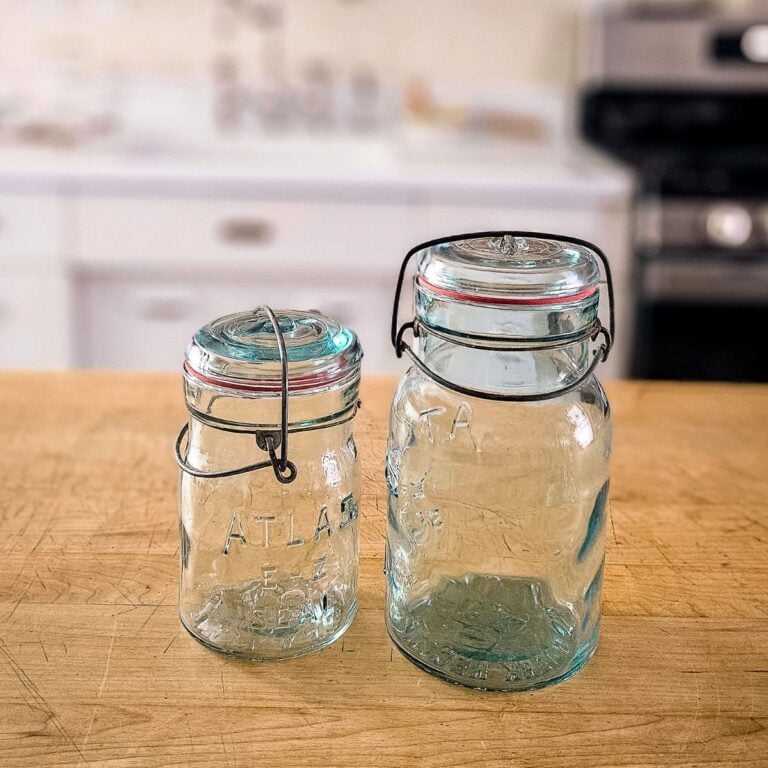
Vintage Mason Jars (Especially Pre-1920s)
Typical Price: $5–$25
What to Look For:
- Embossed lettering (Ball, Atlas, Kerr, etc.)
- Zinc or glass lids
- Unique colors like aqua, amber, or light green
- Patent dates such as 1858

Thrifting Tip:
Older glass often has bubbles, waviness, or thicker seams. Those imperfections usually mean age, and often more value. Perfect for farmhouse or cottage-style decor.
Antique Crocks
Typical Price: $15–$75 (depending on size, age, and condition)
What to Look For:
- Signs of age like wear on the bottom or crazing in the glaze
- Maker’s marks or stamps on the bottom (like Red Wing, Robinson Ransbottom, or Western Stoneware)
- Chips or cracks that are minor; large cracks reduce value
- Original glaze and color (especially cobalt blue designs)

Thrifting Tip:
Antique crocks are perfect for decor or storage — use them as planters, umbrella holders, or rustic kitchen containers. Larger or rare-marked crocks can sometimes be worth more than the typical thrift price, so keep an eye out!
Framed Vintage Mirrors
Typical Price: $15–$75
What to Look For:
- Gilded, carved, or ornate frames
- Beveled glass
- Foxing (natural speckling or aging on the mirror)

Thrifting Tip:
Some aging on the mirror glass adds charm. Just check the frame corners, backing, and hanging hardware to make sure it’s sturdy.
These make beautiful focal points in rooms, which is why vintage mirrors, antique wall mirrors, and ornate mirror frames are always in demand.
Small Antique Furniture
(Stools, Shelves, Side Tables)
Typical Price: $20–$100
What to Look For:
- Solid wood (no particle board)
- Old screws, square nails, or uneven joinery
- Hand-carved details or aged finishes

Thrifting Tip:
Wobbly doesn’t always mean worthless. Loose joints are often easy fixes, but avoid major rot, deep cracks, or missing structural components.
Ironstone, Transferware & Vintage China
Typical Price: $2–$20 per piece
What to Look For:
- Maker’s marks on the bottom
- Crazing (fine lines in glaze)
- Matching patterns or sets

Thrifting Tip:
Tiny chips are fine for display, but avoid deep cracks if you plan to actually use the pieces.
Brass, Copper & Pewter Decor
Typical Price: $5–$30
What to Look For:
- Heavier weight
- Natural patina
- Engraving, stamps, or maker’s marks

Thrifting Tip:
Don’t be scared of tarnish. Many buyers prefer aged patina, and it can always be polished if you want a brighter look.
Vintage Books (Pre-1950s)
Typical Price: $2–$15 each
What to Look For:
- Cloth or linen covers
- Embossed or gilded titles
- Illustrations or interesting topics

Thrifting Tip:
These are perfect for stacked decor, shelf styling, or photography props. Heavily damaged books are great for crafting.
Pro Tip for Thrift Store Shopping
If something feels a little overpriced, ask politely if they offer discount days or markdowns on older inventory. Many thrift stores rotate stock regularly and are happy to reduce prices, especially on items that have been sitting.
Before You Buy, Ask:
- Is it solid wood or quality material?
- Is the damage cosmetic or structural?
- Does the price match the condition?
- Would I still love it if I couldn’t resell it?
Frequently Asked Questions
Love Vintage Style?
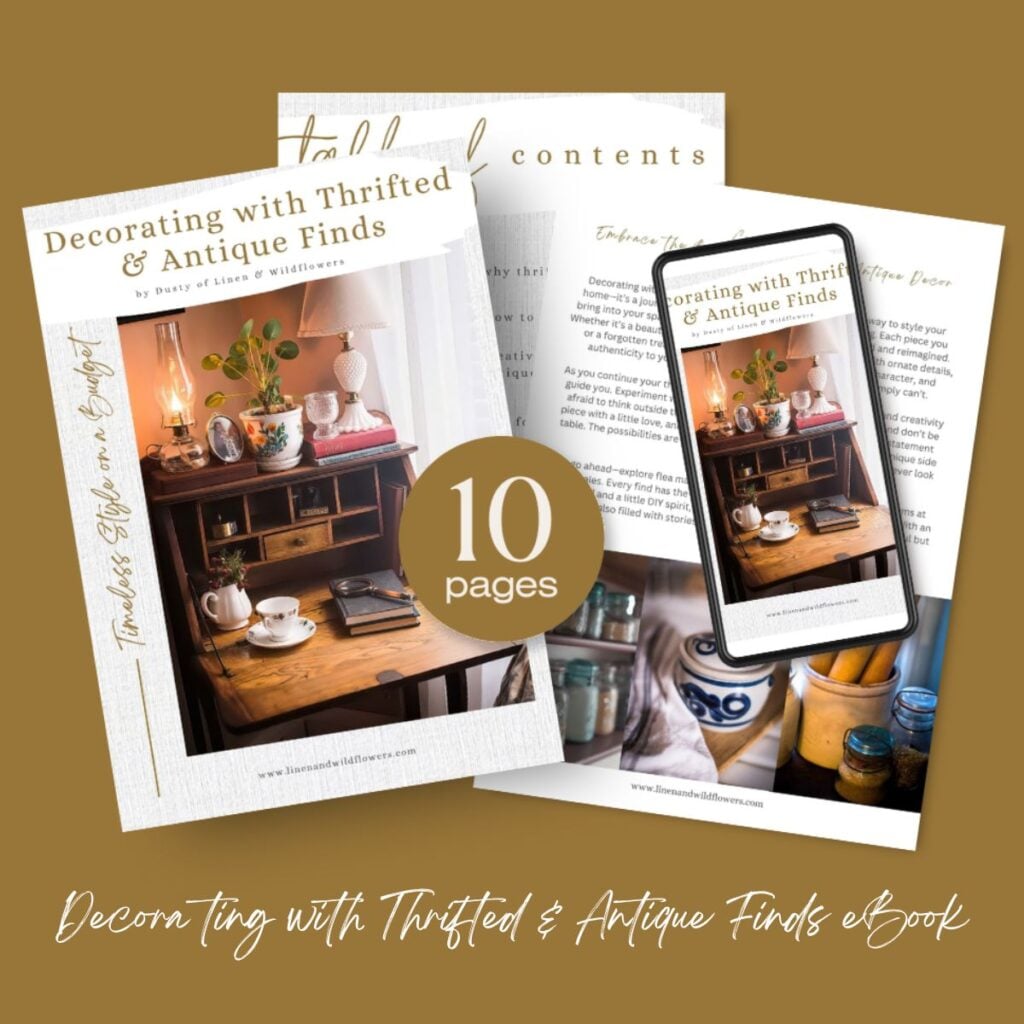
Download my free eBook: Decorating with Thrifted & Antique Finds! It’s perfect for keeping in your bag on your next thrift trip!
Visual Clues That Something Is Older Than It Looks
Age often shows up in small construction details and natural wear. These visual clues can help you tell whether a piece truly has a history.
- Square Nails vs. Modern Nails: Older furniture and wooden pieces may use square-cut nails or irregular fasteners instead of perfectly round, machine-made nails.
- Hand Stitching on Fabric: Uneven stitches, hand-sewn hems, or older seam finishes can signal age in linens, quilts, and clothing.
- Heavy Weight in Metal Items: Older brass, iron, and pewter pieces are often heavier and more solid than modern decorative versions.
- Worn Edges Instead of Sharp Factory Lines: Authentic age creates smooth wear on corners, handles, and edges from years of use, not artificially distressed scratches.
These small details are often more reliable than a store tag and can help you spot genuine older pieces hiding in plain sight.
More Posts You’ll Fancy!
Final Thoughts
Learning what antiques are worth at thrift stores takes practice, but this price guide helps you avoid beginner mistakes and shop with confidence.
Over time, you’ll develop a feel for quality, age, and value, and those “Is this worth it?” moments get a lot easier. The more you thrift, the faster you’ll recognize quality, age, and fair pricing at a glance.