
My Grandmother’s Cast Iron Skillets: A Family Heirloom in My Kitchen
These skillets are more than just kitchen cookware to me. They are family heirlooms that have become part of our everyday life, carrying a little piece of my family’s history into my own kitchen.
Growing up, my parents and grandparents always cooked with cast iron cookware. At the time, I didn’t think much about it. Cast iron was simply what they cooked with.
It wasn’t until I had been married for several years that I really began to appreciate cooking with cast iron myself.
I bought a set of cast iron skillets and tried to figure out how to care for and season them. I remember being so confused about the whole process that I eventually gave up and put them aside.
It would be several years before I gave cast iron another try.
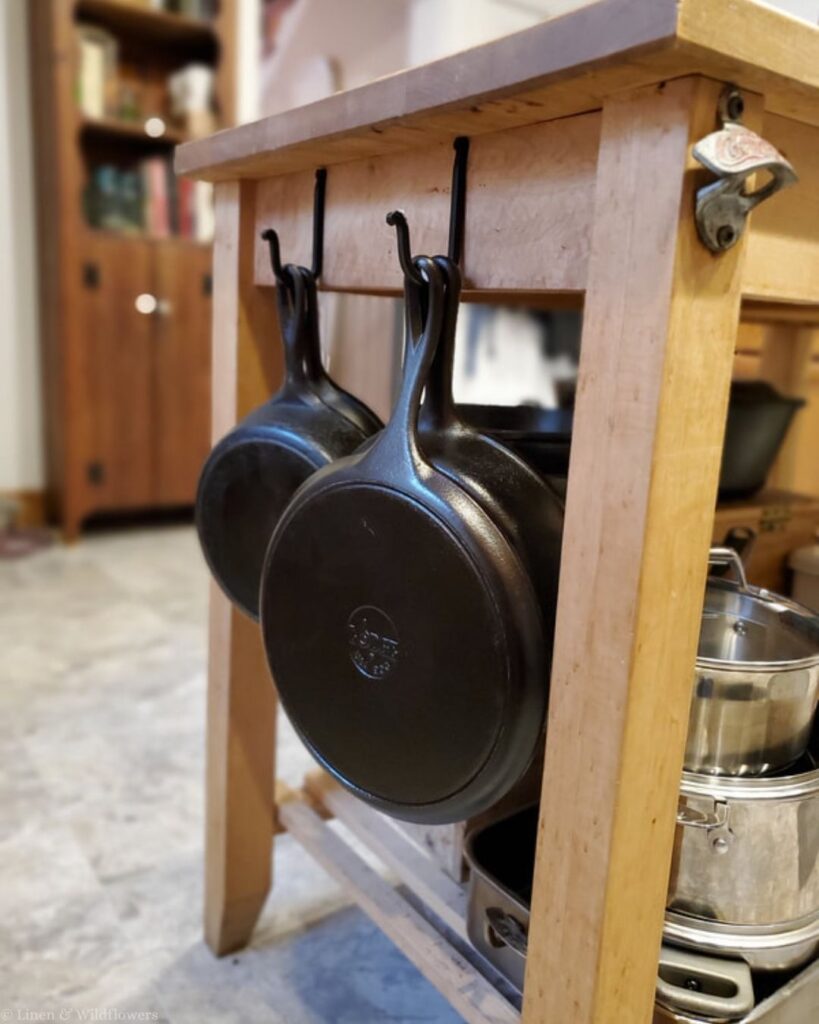
How I Inherited My Grandparents’ Cast Iron Skillets
One day, my sister and I were talking about the cast iron cookware she had received from our grandparents. I told her that I would really love to start cooking with cast iron again.
My sister cooked with hers all the time and made the best fried chicken and cornbread. She knew how much I wanted to get back into cooking with cast iron, so she offered to give me some of the old cast iron skillets she had received from our grandparents.
I wasn’t just getting a few old skillets. I was going to be cooking with the very same cast iron skillets my grandmother and grandfather had used in their kitchen. That made me so excited!
That made them extra special to me. The skillets were in wonderful shape and already had a beautiful seasoning built up from years of cooking.
Then my dad gave me a chicken fryer, which is essentially a deep cast iron skillet, that he and my mom had cooked with. Before I knew it, I was hooked.
I purchased a few Lodge cast iron skillets from local stores, and then we added a couple of larger skillets to our collection. Eventually, a cast iron Dutch oven and a few other pieces joined the collection.
Let’s just say I was officially addicted to cast iron!
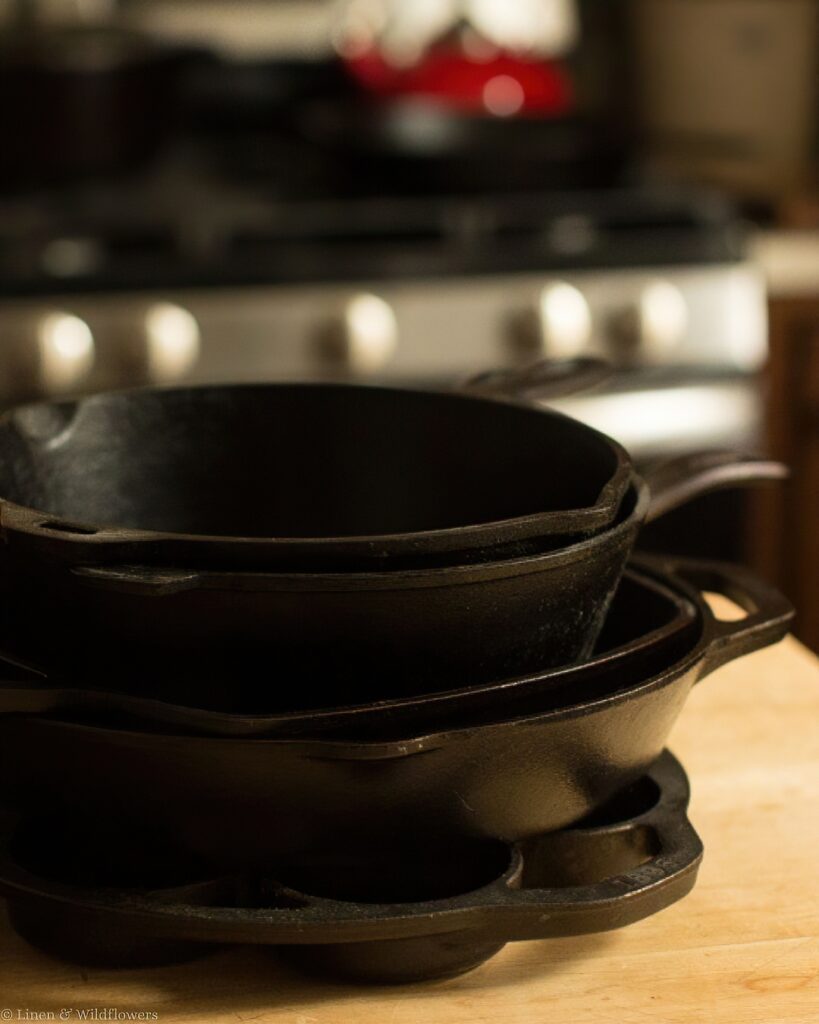
We Cook and Bake in Cast Iron Every Day
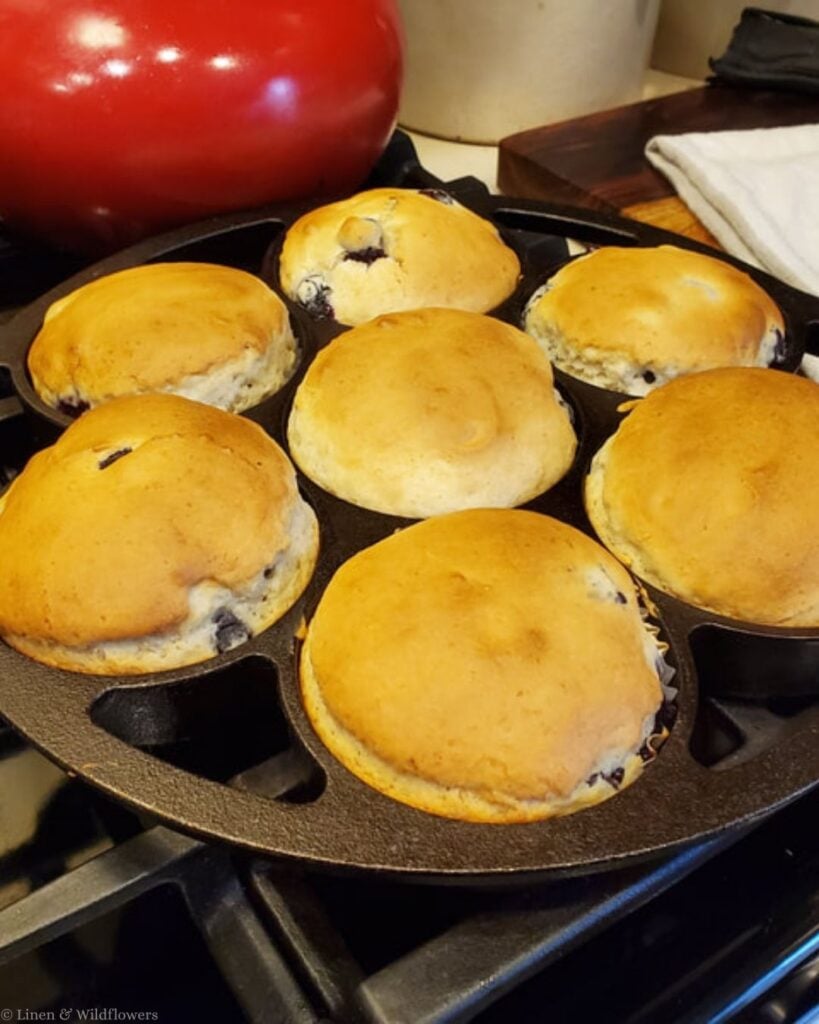
These days, we cook with cast iron almost every day. Baking in cast iron has been a little trickier for me, and I’m still learning. I’m always looking for new tips and tricks and experimenting with different recipes.
But cooking in cast iron has become second nature. For several years now, cast iron has been our everyday cookware. We even got rid of our old frying pans because we simply didn’t use them anymore.
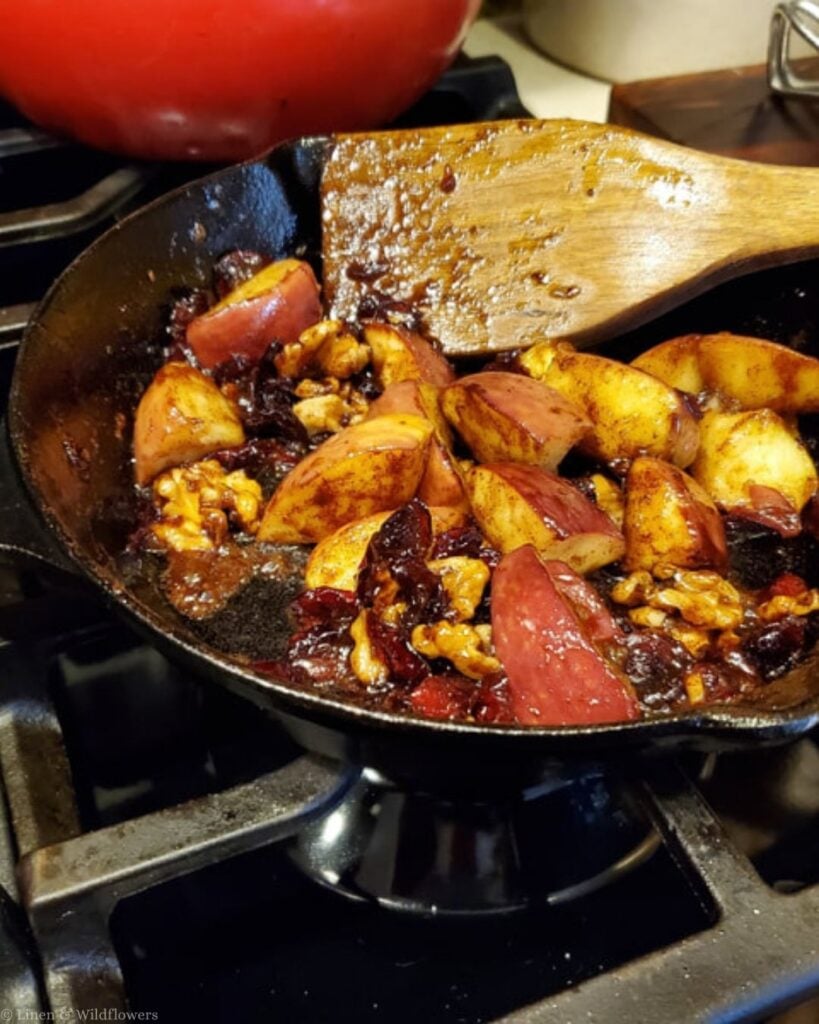
And honestly, I love it. There is just something about cooking in a well-seasoned cast iron skillet. It holds heat beautifully, goes from stovetop to oven, and can be used for everything from frying chicken to baking cornbread.
And yes, I think food tastes better cooked in cast iron!
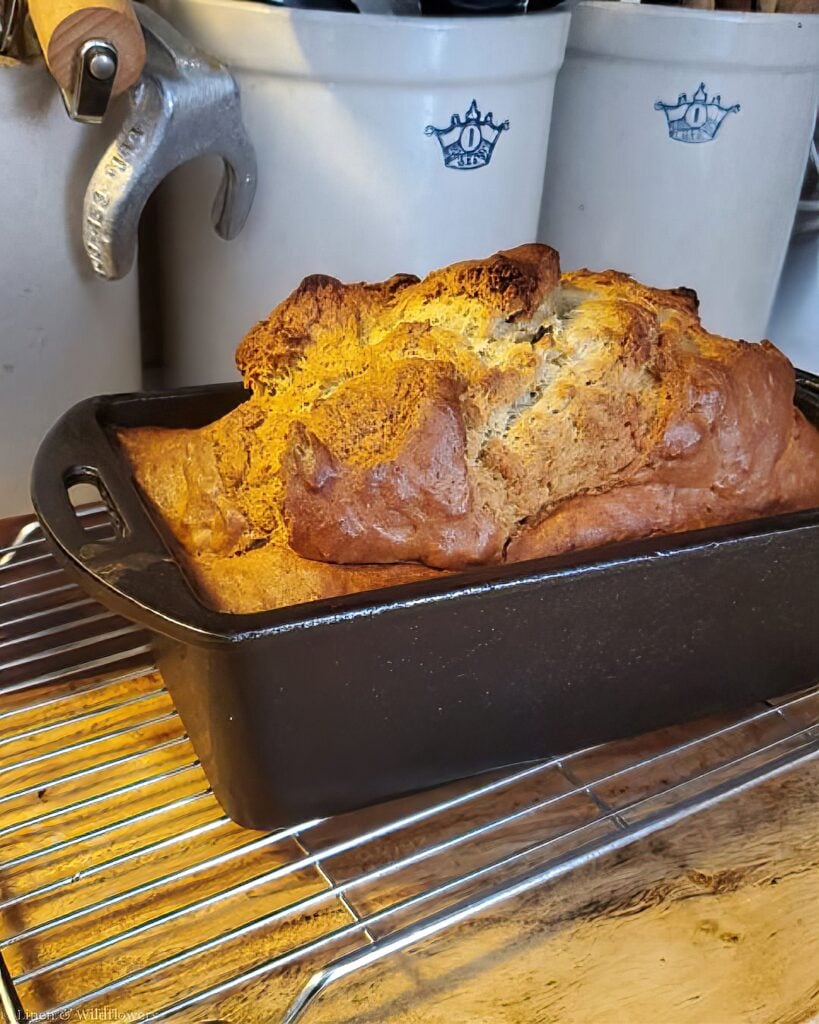
The Key to Caring for Cast Iron Is Good Seasoning
One of the most important things you can do for your cast iron skillets is maintain their seasoning.
Seasoning is the layer of polymerized oil that builds up on the surface of the iron. Over time, regular cooking and proper care can create a smooth, naturally nonstick cooking surface.
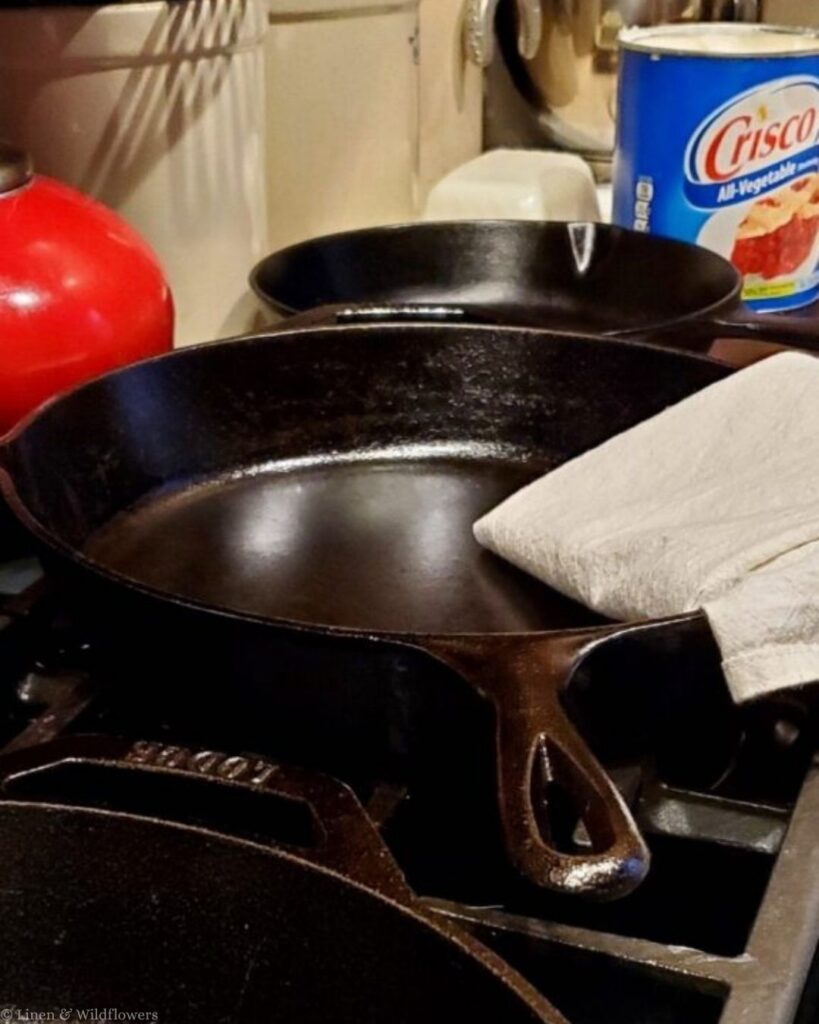
There are many opinions about which oil is best for seasoning cast iron. I’ve tried different methods over the years, but I personally like using Crisco shortening. A little goes a long way.
After washing my skillet, I dry it completely. I often place it on the stovetop over low heat for a few minutes to make sure all of the moisture has evaporated.
Once the skillet is dry, I put a very small amount of Crisco on a lint-free tea towel and rub it over the entire skillet, including the inside, outside, handle, and bottom. The important part is to wipe away the excess.
You want a very thin layer of oil or shortening, not a thick coating. If too much is left on the skillet, it can become sticky instead of developing a smooth seasoning.
How to Care for Cast Iron in 3 Easy Steps
Once you get into the habit, caring for cast iron is really quite simple.
1. Clean Your Cast Iron Skillet After Cooking
After cooking, allow the skillet to cool enough to handle safely, then wash it with hot water. A small amount of mild dish soap is perfectly fine to use.
Contrary to the old advice that soap should never touch cast iron, modern well-seasoned cast iron can be cleaned with mild soap without ruining the seasoning.
Use a brush, sponge, or scraper to remove food residue. For stubborn bits of food, coarse salt can be helpful as a gentle scrub.
2. Dry the Skillet Thoroughly
Water and cast iron are not a good combination when left together. After washing, dry your skillet completely with a towel.
I also like to place mine on the stovetop over low heat for a few minutes to make sure there is no remaining moisture. This simple step helps prevent rust.
3. Apply a Very Thin Layer of Oil
Once the skillet is completely dry, apply a tiny amount of cooking oil or shortening. Rub it over the cooking surface and exposed iron, then wipe away the excess.
Remember: thin is the key.
You don’t need to leave your skillet looking greasy. The goal is simply to leave behind a very light protective coating.
You Got a New Cast Iron Skillet—Now What?
If you’ve just purchased a new cast iron skillet, you may be wondering what you’re supposed to do before using it.The good news is that many modern cast iron skillets come pre-seasoned, so you can usually start cooking with them right away after washing and drying them. Still, I like to give a new skillet a little extra care before putting it to work.
1. Wash and Dry
Wash your new cast iron skillet with warm water and a little mild dish soap if needed. Dry it thoroughly with a towel and, if desired, warm it gently on the stovetop to make sure all moisture has evaporated.
2. Check the Seasoning
If your skillet is pre-seasoned and the surface looks smooth, you can start cooking. If you’d like to add another layer of seasoning, apply a very thin coat of oil or shortening and follow a proper oven-seasoning process.
3. Start Cooking
When you’re first getting used to cast iron, start with low to medium heat. Cast iron takes a little longer to heat than some other cookware, but it retains heat extremely well. You don’t need to crank the burner up to high. Preheating the skillet gradually can also help prevent food from sticking.
4. Use a Little Oil or Fat
Even a well-seasoned cast iron skillet may benefit from a little oil, butter, or cooking fat depending on what you’re making. This is especially helpful when you’re still building up the seasoning on a newer skillet.
5. Don’t Be Afraid of Acidic Foods
You’ve probably heard that you should never cook tomatoes or other acidic foods in cast iron. The truth is a little more complicated.
A well-seasoned cast iron skillet can handle acidic foods, especially for shorter cooking times. However, prolonged cooking of highly acidic foods can affect seasoning and may give food a metallic taste.
If your skillet is newly seasoned or the seasoning is still developing, you may want to avoid long-simmering acidic recipes until the seasoning is well established.
6. Clean and Dry After Every Use
After cooking, clean your skillet, dry it completely, and apply a very thin layer of oil if needed. The more you use your cast iron skillet, the more familiar the process becomes.
What Is the Best Oil for Seasoning Cast Iron?
There are many opinions about the best oil for seasoning cast iron. The important thing is to choose an oil or fat that works well for high-heat cooking and to apply it in a very thin layer.
Some commonly used options include:
- Vegetable Oil: is inexpensive, readily available, and commonly used for cast iron seasoning.
- Canola Oil: another popular choice because it is affordable, neutral in flavor, and works well for seasoning.
- Grapeseed oil: is another option that many cast iron cooks use for seasoning.
- Crisco Shortening: is my personal preference. It is the method I’ve settled into after years of cooking with my cast iron skillets.
There isn’t necessarily one magical oil that everyone must use. Consistency and proper technique matter more than constantly switching between different oils.
How Do You Know if Your Cast Iron Is Nonstick?
A well-seasoned cast iron skillet can develop a wonderfully smooth cooking surface. One of the easiest ways to see how your seasoning is performing is to cook foods that are known to test a skillet’s nonstick properties.
Fried Eggs
Eggs are a great little test.
- Preheat your cast iron skillet over low to medium heat.
- Add a small amount of butter or oil.
- Crack an egg into the skillet.
- Allow the egg to cook without immediately trying to move it.
- Once it has developed a cooked surface underneath, gently slide a spatula underneath.
If the egg releases easily, your seasoning and cooking temperature are working well together. Don’t worry if your first egg sticks. Cast iron is a learning process, and temperature control makes a big difference.
Bacon
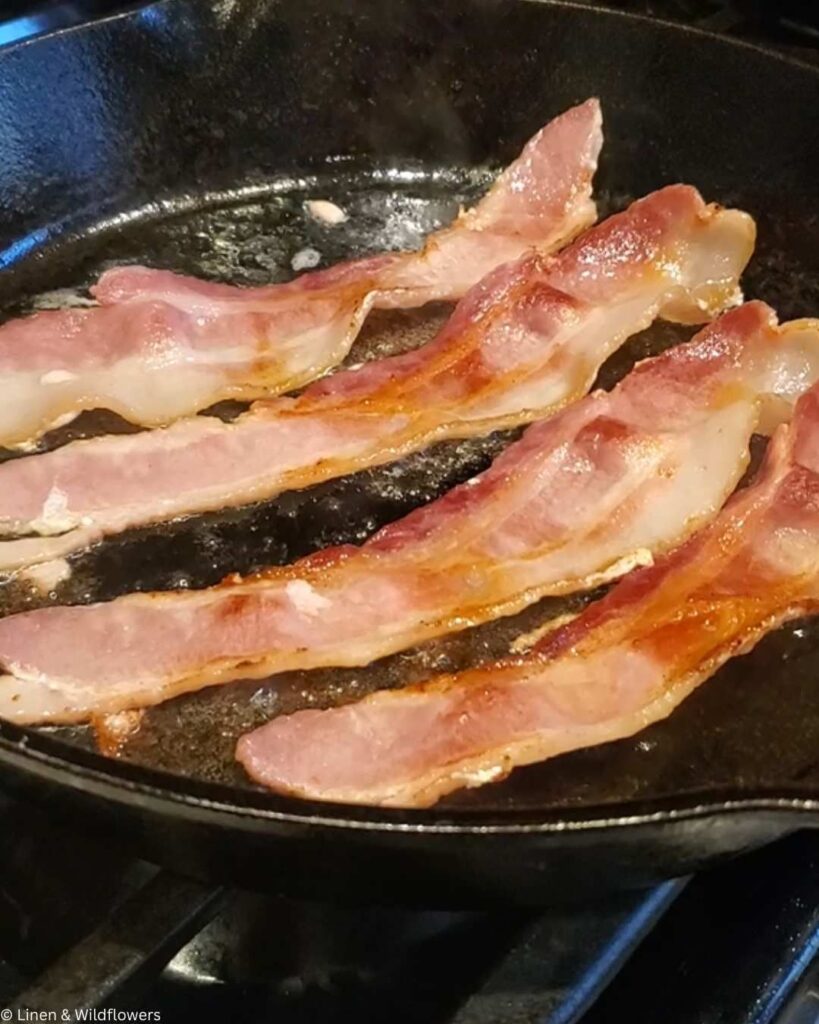
Bacon is another easy way to test your skillet. Place the bacon in a cool or gently preheated skillet and cook it over medium or medium-low heat.
As the bacon cooks, watch how easily it releases from the surface. And, of course, you get to eat the bacon afterward—which makes this a pretty good test in my book!
10 Common Cast Iron Skillet Myths
There is a lot of information floating around about cast iron, and some of it is simply outdated. Here are a few common myths I’ve come across.
- Cast iron is difficult to maintain: It does require a little different care than modern nonstick cookware, but once you get into a routine, cast iron is surprisingly easy to maintain.
- You should never use soap on cast iron: A small amount of mild dish soap is perfectly fine. Harsh detergents and excessive scrubbing are what you want to avoid.
- You should always cook with high heat: Nope! Cast iron retains heat extremely well, so medium or medium-low heat is often all you need.
- You can’t use metal utensils: You can. Cast iron is incredibly durable, and a well-seasoned skillet can handle metal utensils.
- Cast iron rusts easily: Cast iron can rust if it is left wet, but proper drying and a light protective coating of oil can help prevent rust.
- Acidic foods will automatically ruin cast iron: Not necessarily. A well-seasoned skillet can handle many acidic foods. The concern is more about prolonged exposure, particularly when the seasoning isn’t well established.
- You need special cleaning products: You don’t need a cabinet full of specialty products. A brush or sponge, hot water, a little mild soap, and a clean towel can take care of most everyday cleaning.
- Cast iron heats evenly because it is a great conductor of heat: Cast iron isn’t actually the best heat conductor compared with some other cookware materials. What it does exceptionally well is retain heat once it has heated up. That’s one reason I love it for cooking.
- Every new cast iron skillet needs to be seasoned from scratch: Many modern cast iron skillets come pre-seasoned, so you can generally begin cooking with them after washing and drying them. You can always add additional seasoning if you want to.
- Cast iron is only good for frying: Absolutely not! You can fry, sauté, roast, bake, sear, and even cook desserts in cast iron. Cast iron is one of the most versatile pieces of cookware in my kitchen.
More Posts You’ll Fancy!
Frequently Asked Questions
Why I Love My Grandmother’s Cast Iron Skillets
When I think about my grandmother’s cast iron skillets, I realize they are so much more than cookware to me. They are a little piece of my family’s history that I get to use every day in my own kitchen.
I love knowing that my grandmother and grandfather cooked with these very same skillets. They made meals, gathered around the table, and created memories with them, and now, years later, those skillets are helping me create memories in my own home.
I certainly didn’t understand the value of cast iron when I was younger. I even gave up on it for a while because I couldn’t figure out how to care for it properly! But receiving my grandparents’ skillets gave me a reason to try again, and I’m so glad I did.
Now I’m using them in my own kitchen. There is something comforting about that. Every time I pull one of those old skillets from the cabinet, I know I’m holding something that was once part of my grandparents’ everyday life.
Cooking with Cast Iron Has Become Second Nature
From everyday meals to baking and everything in between, these old skillets have earned a permanent place in my kitchen.
There is something special about using things that have been loved and used by the people who came before us. They carry stories, memories, and a little bit of the life that came before ours.
And that’s what makes these cast iron skillets so special to me. They aren’t just family heirlooms sitting on a shelf. They’re family heirlooms still being used, still making meals, and still becoming part of our family’s story.
They cooked family meals in them.
They made memories with them.
And now, years later, I’m doing the same thing.
I hope someday I can pass them along to the next generation, along with the stories of where they came from and all the meals we made in them. Because sometimes the most meaningful things in our homes aren’t the newest or most expensive. They’re the things that have a story.
Final Thoughts
Cooking with cast iron has become such a normal part of our everyday life that I sometimes forget how hesitant I was when I first tried it. I didn’t understand seasoning. I didn’t know how much oil to use. And eventually, I gave up. Thankfully, I gave cast iron another chance.
Receiving those cast iron skillets from my grandparents completely changed the way I looked at this old-fashioned cookware. What started as a desire to learn how to cook with cast iron turned into something I genuinely love.
And now those skillets aren’t sitting in a cabinet collecting dust. They’re being used, every day. They’re cooking our meals, baking our bread, and becoming part of our family’s story.
That’s what I love most about vintage and heirloom pieces. They don’t have to remain untouched just because they’re old.
Use them.
Enjoy them.
Give them a little care.
And let them become part of your story, too.
If you’re new to cooking with cast iron, don’t be intimidated. It may take a little practice to learn how your skillet heats and how much oil to use, but once you get the hang of it, you may find yourself reaching for cast iron again and again.
And if you’re lucky enough to inherit a cast iron skillet from a grandmother, grandfather, parent, or another family member, treasure it.
You’re not just inheriting a piece of cookware. You’re carrying a little piece of family history into your own kitchen.
If you’d like more help learning how to care for your cast iron, you can read my guide on Easy Cast Iron Care. And if you have a favorite cast iron tip or family recipe, I’d love to hear about it in the comments!
Love your stuff.
Thank you <3