
Common Mistakes That Ruin Wooden Utensils
Wooden utensils are a timeless kitchen staple. Whether you love hand-carved spoons, vintage wooden spatulas, or handmade salad servers, they can last for many years with proper care.
Unfortunately, many people unknowingly damage their wooden utensils through everyday habits. The good news is that these mistakes are easy to avoid once you know what to look for.
If you’ve invested in quality wooden kitchen tools or enjoy collecting vintage kitchen utensils, here are the most common mistakes that ruin wooden utensils and how to keep them looking beautiful for years to come.
Why Wooden Utensils Need Special Care
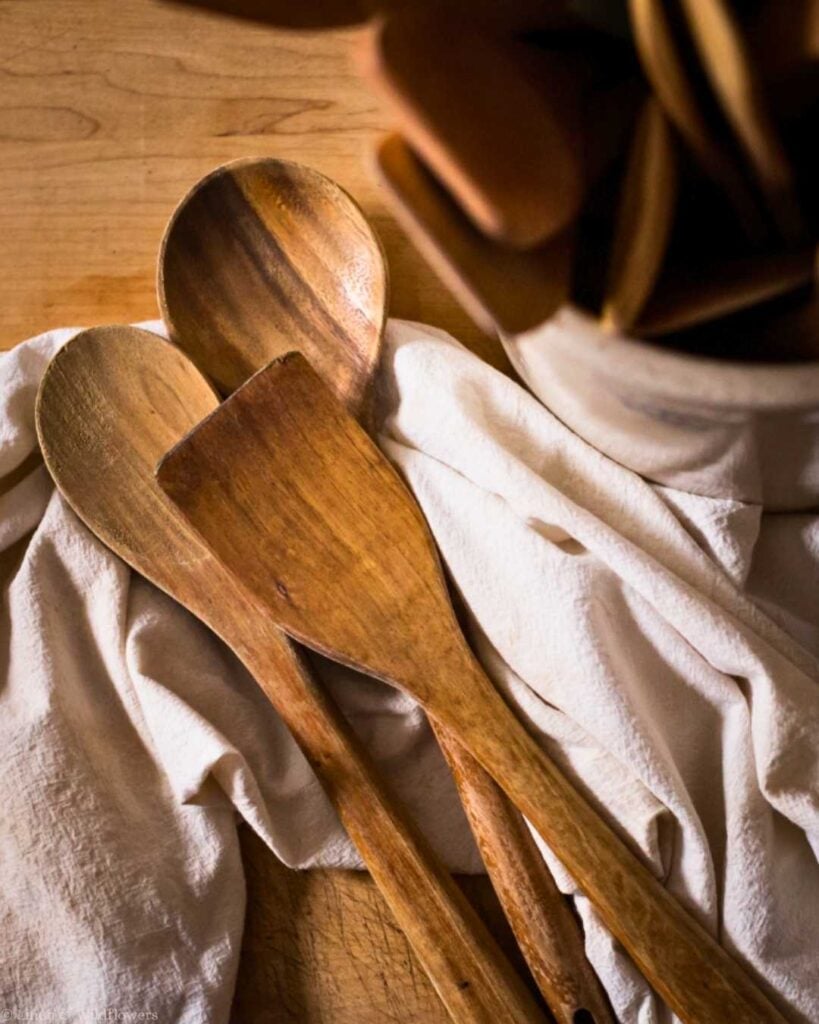
Wooden utensils are naturally durable, but because they’re made from a living material, they require a little more care than metal or silicone kitchen tools.
Unlike plastic or stainless steel, wood is porous, meaning it can absorb moisture if left wet for too long. Without proper care, this can lead to cracking, warping, rough surfaces, or unpleasant odors over time.
The good news is that caring for wooden utensils is simple. A few easy habits, like handwashing, drying thoroughly, and occasionally conditioning the wood, can keep your favorite spoons, spatulas, and other kitchen tools looking beautiful and functioning well for years.
Understanding the common mistakes that ruin wooden utensils is the first step toward protecting them and extending their lifespan.
Common Mistakes That Ruin Wooden Utensils and How to Avoid Them
Although wooden utensils are built to withstand everyday cooking, a few common habits can shorten their lifespan. Leaving them soaking in water, putting them in the dishwasher, storing them while damp, using harsh cleaners, and forgetting to oil them are some of the biggest causes of damage.
Fortunately, these mistakes are easy to avoid. By making a few simple changes to your kitchen routine, you can prevent cracking, warping, and drying, helping your wooden kitchen tools remain both functional and beautiful for many years.
How to Make Wooden Utensils Last Longer
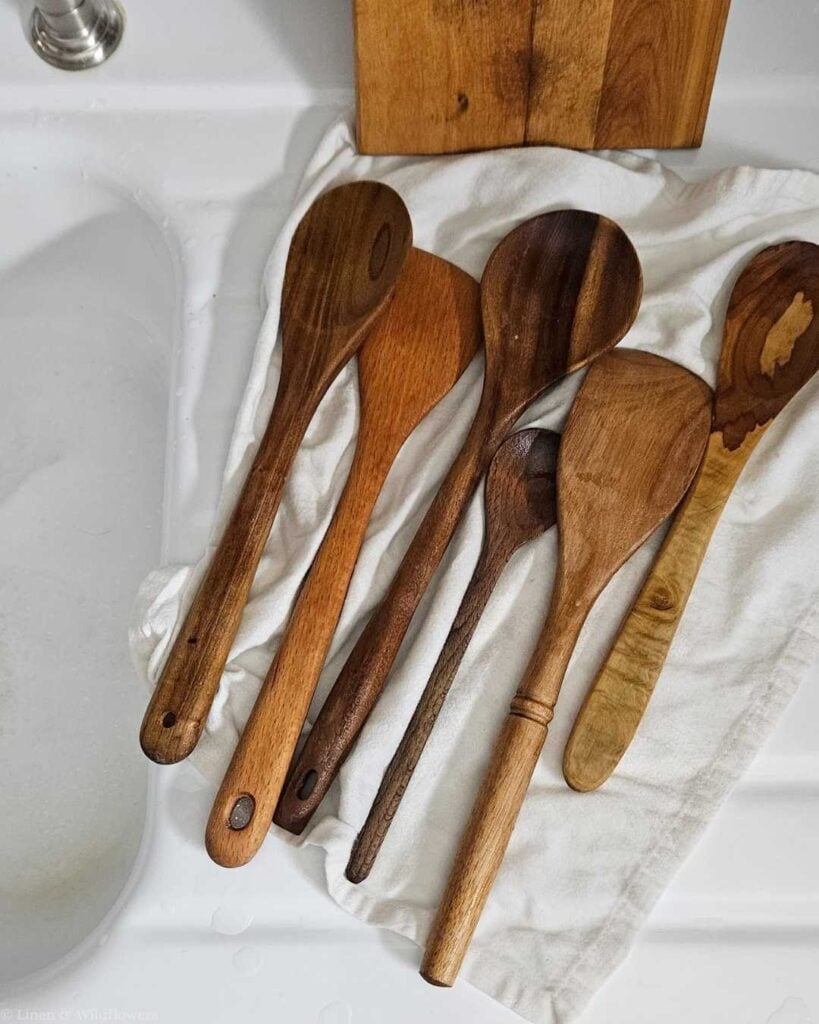
Keeping wooden utensils in excellent condition doesn’t require much work; it simply requires consistent care. It’s best to wash them by hand with mild dish soap, dry them thoroughly after each use, and apply a food-safe mineral oil or beeswax conditioner whenever the wood begins to look dry.
For most home cooks, oiling wooden utensils about once a month is a good rule of thumb, but you may need to do it more often in dry climates or when the wood starts to look dull.
Store your utensils in a clean, dry place with good airflow, and inspect them occasionally for rough spots or cracks.
With these simple habits, your wooden spoons, spatulas, and serving utensils can last for decades. Whether you use them every day or display them in a cozy, vintage-inspired kitchen, proper care will help preserve both their beauty and usefulness for years to come.
1. Leaving Wooden Utensils Soaking in Water
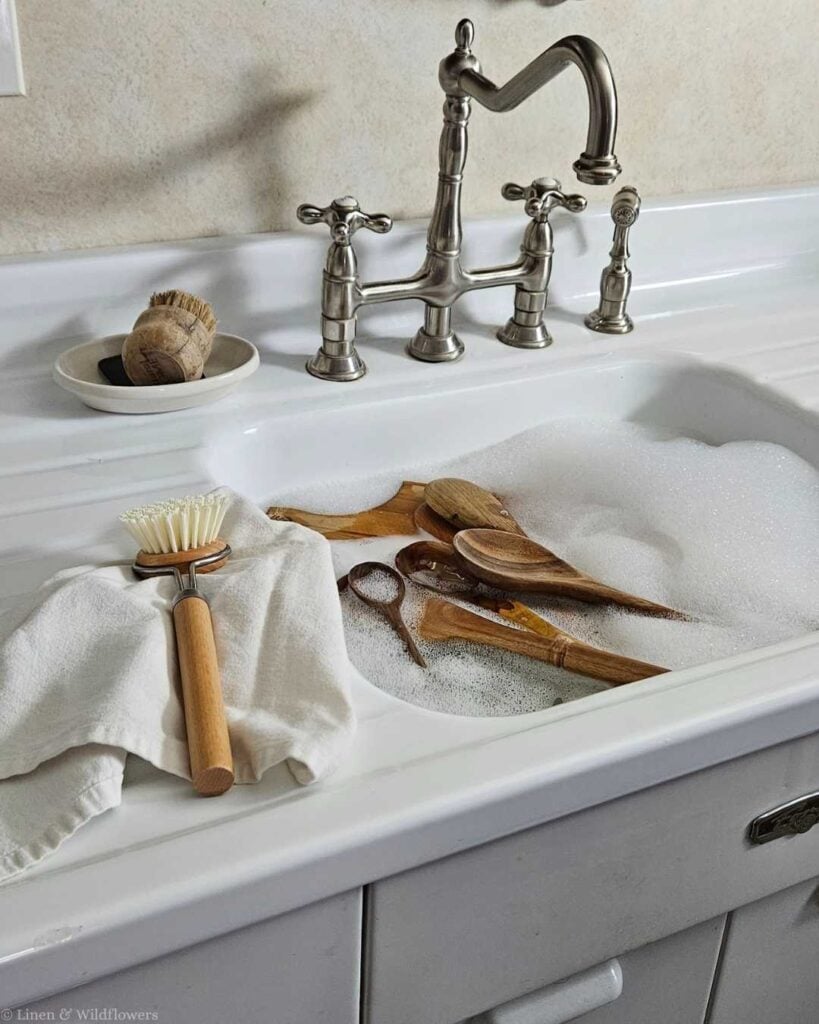
One of the biggest mistakes people make is leaving wooden spoons or spatulas sitting in a sink full of water.
Wood naturally absorbs moisture. When left soaking, it can:
- Swell
- Warp
- Crack as it dries
- Develop unpleasant odors
- Encourage mold growth
Instead, wash wooden utensils soon after use and rinse them quickly, rather than letting them sit in water.
Best Tip: Clean them promptly and dry them immediately.
2. Putting Wooden Utensils in the Dishwasher
The dishwasher may seem convenient, but it’s one of the fastest ways to ruin wooden utensils.
Dishwashers expose wood to:
- High heat
- Long water exposure
- Strong detergents
- Heated drying cycles
Over time, this causes:
- Splitting
- Warping
- Fading
- Rough surfaces
- Loose glue joints (for laminated utensils)
Always hand-wash wooden utensils with warm water and mild dish soap.
3. Not Drying Them Completely
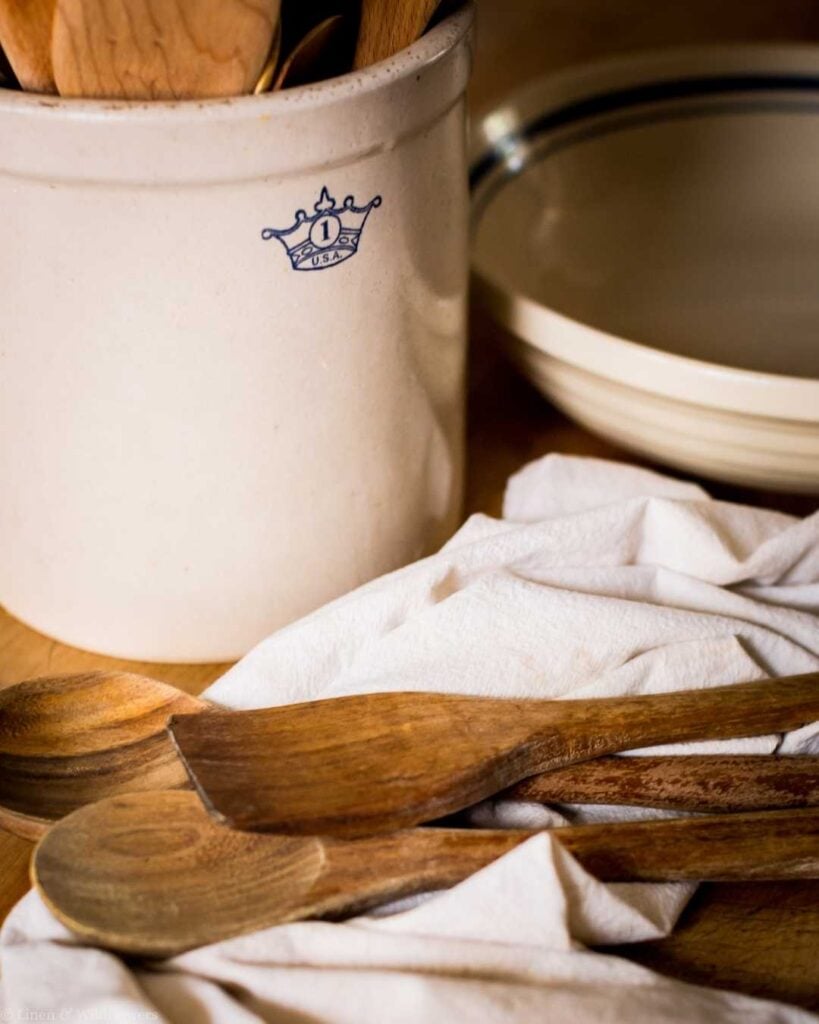
Many people wash their utensils and immediately toss them into a utensil crock while they’re still damp.
Moisture trapped inside the wood creates the perfect environment for mildew and can eventually lead to cracking as the wood repeatedly expands and contracts.
Instead:
- Dry immediately with a clean towel.
- Allow utensils to air dry completely before storing them.
A few extra minutes of drying can add years to their life.
4. Using Harsh Cleaners or Bleach
Wood is much gentler than stainless steel and requires gentle cleaning products.
Avoid using:
- Bleach
- Oven cleaners
- Abrasive powders
- Strong degreasers
- Steel wool
These products strip away the wood’s natural oils, leaving it dry, rough, and prone to cracking.
Instead, use:
- Mild dish soap
- Warm water
- A soft sponge or cloth
For occasional deodorizing, sprinkle baking soda on the utensil, gently scrub, rinse well, and dry thoroughly.
5. Never Oiling Wooden Utensils
Just like wood furniture, wooden utensils occasionally need conditioning. Without oil, the wood gradually dries out and becomes brittle.
Signs your utensils need oil include:
- Dull appearance
- Rough texture
- Light-colored dry patches
- Tiny surface cracks
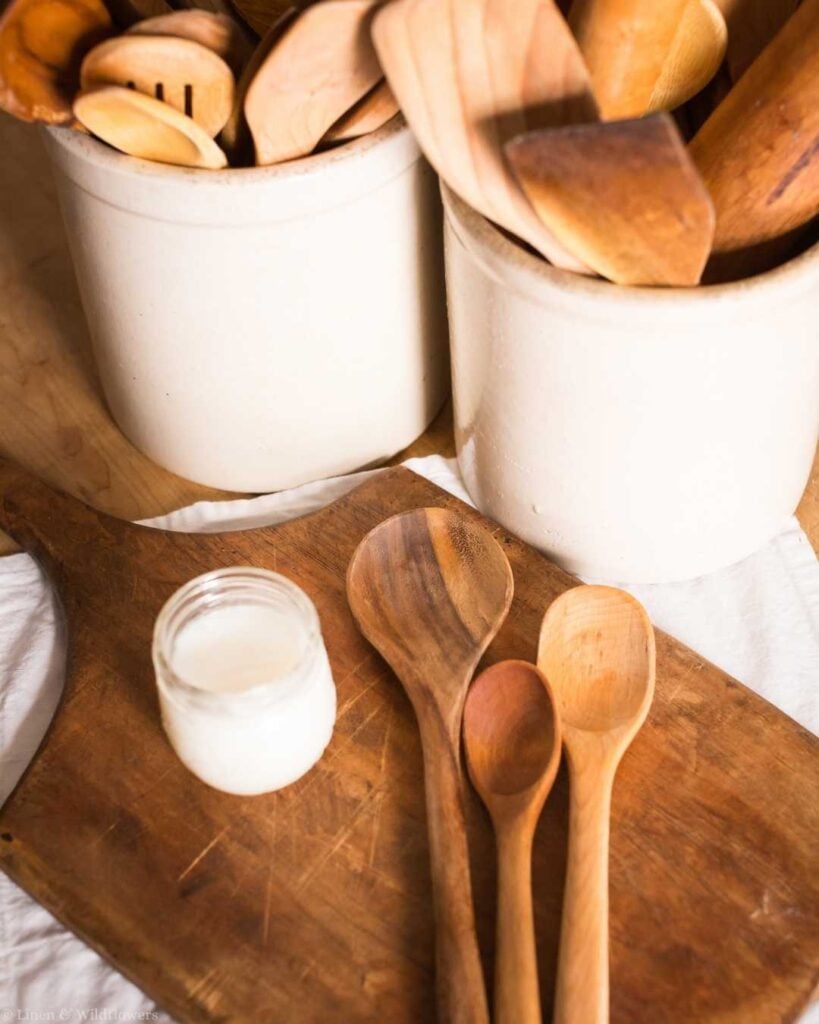
Food-grade mineral oil or beeswax conditioner helps:
- Restore moisture
- Prevent cracking
- Protect against stains
- Keep the wood looking rich and beautiful
Many people only remember to oil cutting boards, but wooden spoons and spatulas benefit just as much.
6. Storing Them While They’re Still Wet
Even if you don’t soak them, storing damp utensils can create problems.
A closed drawer or crowded utensil holder traps moisture, which may lead to:
- Mold
- Mildew
- Musty odors
- Dark discoloration
Allow utensils to dry completely before placing them in drawers, crocks, or storage containers.
7. Using Wooden Utensils Over Extremely High Heat
Wood handles heat well, but prolonged exposure to very high temperatures can scorch or dry them out.
Avoid:
- Leaving utensils resting inside hot pans for long periods
- Setting wooden spoons directly on hot burners
- Using them over open flames
Instead, place utensils on a spoon rest between stirring.
8. Ignoring Cracks and Splinters
Small cracks may seem harmless, but they can trap moisture and food particles.
Watch for:
- Deep cracks
- Splintering
- Loose pieces
- Rough edges
Minor rough spots can often be smoothed with fine sandpaper and reconditioned with mineral oil. If a utensil has deep cracks or splinters that could end up in food, it’s time to replace it.
9. Storing Wooden Utensils in Damp Areas
Wood absorbs moisture from the surrounding environment.
Avoid storing utensils:
- Under damp sinks
- Next to leaking dishwashers
- In humid cabinets
- Near areas with poor airflow
Choose a dry drawer or countertop utensil crock with good ventilation.
10. Forgetting That Wooden Utensils Need Regular Care
Wood isn’t a maintenance-free material.
A little routine care goes a long way:
- Wash by hand.
- Dry thoroughly.
- Oil occasionally.
- Store in a dry place.
- Inspect for cracks.
These simple habits can help quality wooden utensils last for decades.
Why Wooden Utensils Are Worth Caring For
Despite requiring a little extra attention, wooden utensils remain one of the best tools for everyday cooking.
They are:
- Gentle on cookware
- Naturally beautiful
- Comfortable to hold
- Durable when cared for properly
- Timeless enough to fit both modern and vintage kitchens
With just a few simple habits, your favorite wooden spoons and spatulas can become cherished kitchen companions for years to come.
More Posts You’ll Fancy!
Frequently Asked Questions
Final Thoughts
Learning the common mistakes that ruin wooden utensils can help you avoid unnecessary damage and extend the life of your favorite kitchen tools.
By washing them by hand, drying them completely, and occasionally conditioning them, you’ll keep them looking beautiful and working well for years. A little extra care today means your wooden utensils will continue serving your family through countless meals and memories.

Homemaking Made Easy: 5 Days to a Cozy & Organized Home
This FREE course is for anyone who wants to create a warm, welcoming space, without the overwhelm. Whether you’re just starting out or need a reset, this 5-day journey will walk you through simple steps to make your home feel more peaceful, functional, and you.
It includes:
- Daily Email Lessons
- Printable Freebies
- Easy-to-Follow Tasks
By the end of the 5 days, you’ll feel more at peace, in control, and inspired in your home.
Wow this was so helpful! Thank you so much for sharing this post. I love my acacia utensils so much and want to keep them nice.
You are very welcome. I am so glad this post was helpful!
I have several wooden utensils I rely on. These are great tips. Im thankful my hubby is the wood person and takes care of them for me. :).
That is great! 🙂
Thank you for this article. So many of my wooden utensils were ruined after my kids put them in the dishwasher. These are very good tips for making wooden utensils last a long time.
You are very welcome! My kids were guilty of that too! Lol
Whew, I have definitely been guilty of a few of these! I used to leave my wooden spoons soaking in the sink without thinking twice. This is such a helpful reminder that a little extra care can keep them looking beautiful and lasting for years.
Oh, I have been there before I knew better. Lol I have wooden spoons that I have been using for many years and still going strong.
These are really great tips for taking care of wooden utensils. I need to be better about oiling mine. It only takes a few minutes, and I should do it while I oil my cutting boards. Thanks for the reminder 😉
Yes, it doesn’t take much time at all. You are very welcome!
Great reminders here! I learned the hard way that dishwashers are the enemy of wooden utensils. Warped and cracked more than a few of my favorite pieces before I caught on. Now I hand wash and oil them regularly and they’ve held up so much better.
That’s great! I am glad this post helped you!
Thank you for these clear tips! Having OCD makes having things like wood in the kitchen hard, even when I know it’s the best thing for us. Posts like this really help calm my anxieties and make me feel a little bit of control over my ocd! Thank you!
I am glad this post is helpful! You are very welcome!