
How to Spot a Good Antique Crock (Thrifting Tips Included)
If you love thrifting and antique shopping as much as I do, you’ve probably spotted a stoneware crock sitting quietly on a bottom shelf and wondered… Is this the real deal?
Learning to spot a good antique crock saves you from overpriced reproductions and helps you recognize true vintage pieces. Whether you’re decorating, collecting, or reselling, knowing what to look for makes all the difference.
Antique crocks are one of those quiet treasures that look simple… until you learn what to look for. Then it’s game on at every thrift store.
In this guide, I’m sharing exactly what I check when I find a crock at a thrift store, from bottom markings to hairline cracks, plus my personal “What I’d Pay” pricing guide.
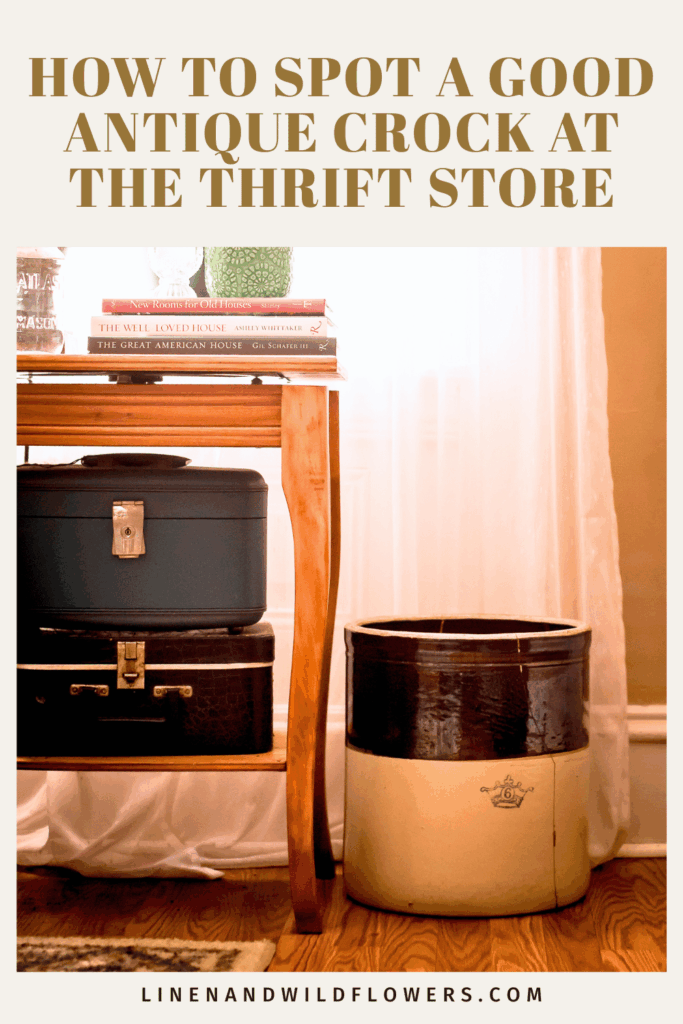
What to Check on the Bottom of an Antique Crock
The bottom tells you a lot.
When I pick up a crock, I flip it over immediately and look for:
1. Maker’s Marks or Stamps
Many antique crocks were made by American stoneware companies like:
Marks may include:
- A stamped logo
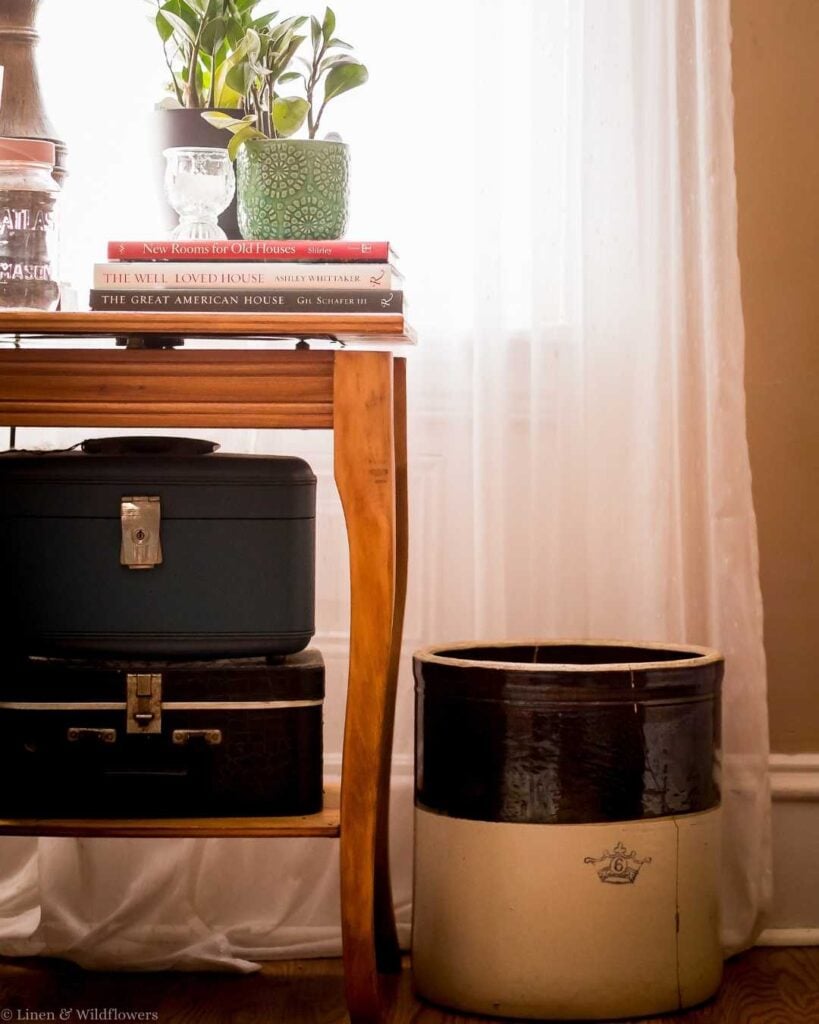
- A cobalt blue number (usually indicating gallon size)
- A town or company name
No mark doesn’t automatically mean it’s not antique; many early crocks were unmarked, but modern reproductions often have very clean, uniform stamps.
2. Wear Patterns
True antique crocks usually show:
- Slightly uneven glaze
- Subtle surface wear
- Minor chipping around the base rim
If the bottom looks perfectly smooth, bright, and untouched, I get suspicious.
3. Weight
Older crocks are heavy. If it feels oddly lightweight, it may be newer.
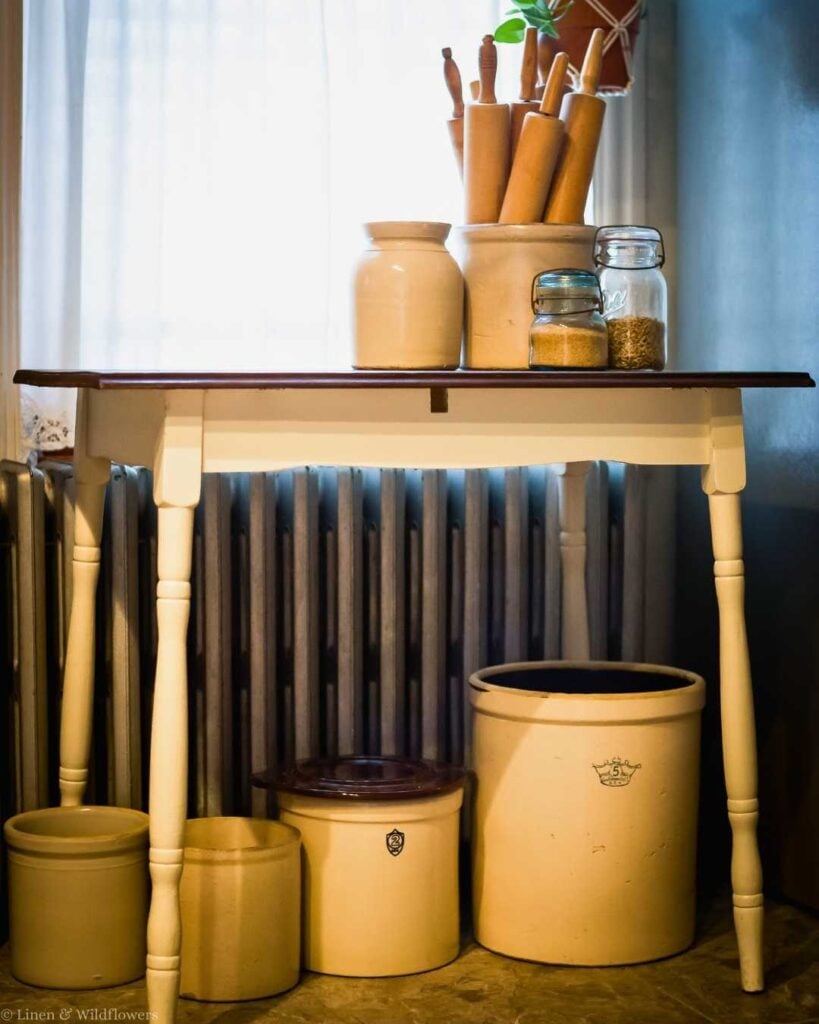
Signs of Reproduction Crocks
Reproductions aren’t bad; they just shouldn’t be priced like antiques.
Here’s what raises red flags for me:
- Perfectly even coloring
- Artificial “distressing”
- Glossy, modern-looking glaze
- Sticker labels instead of stamped marks
- Made in China stamps
Authentic antique crocks often have:
- Slight imperfections
- Hand-applied cobalt decoration
- Thicker walls
If it looks too perfect… it probably is.
Hairline Crack vs. Structural Crack (Big Difference)
This is where things get practical.
- Hairline Crack
- Very thin
- Usually cosmetic
- Doesn’t go all the way through
- Often stable
For decor use? Totally fine. Sometimes it even adds character.
- Structural Crack
- Thick or widening
- Goes through the entire wall
- Makes a dull sound when tapped
- May leak if filled
Tip: Gently tap the side with my fingernail. A clear “ring” sound is good. A dull thud can indicate a deeper crack. If it wobbles or feels unstable, I pass.
How to Clean an Antique Crock Safely
Please don’t toss it in the dishwasher.
Here’s how I clean mine:
- Warm water
- Mild dish soap
- Soft cloth or soft brush
- Baking soda paste for stubborn stains
Avoid:
- Bleach (can weaken old glaze)
- Soaking for long periods
- Abrasive scrubbers
Let it air dry completely before styling.
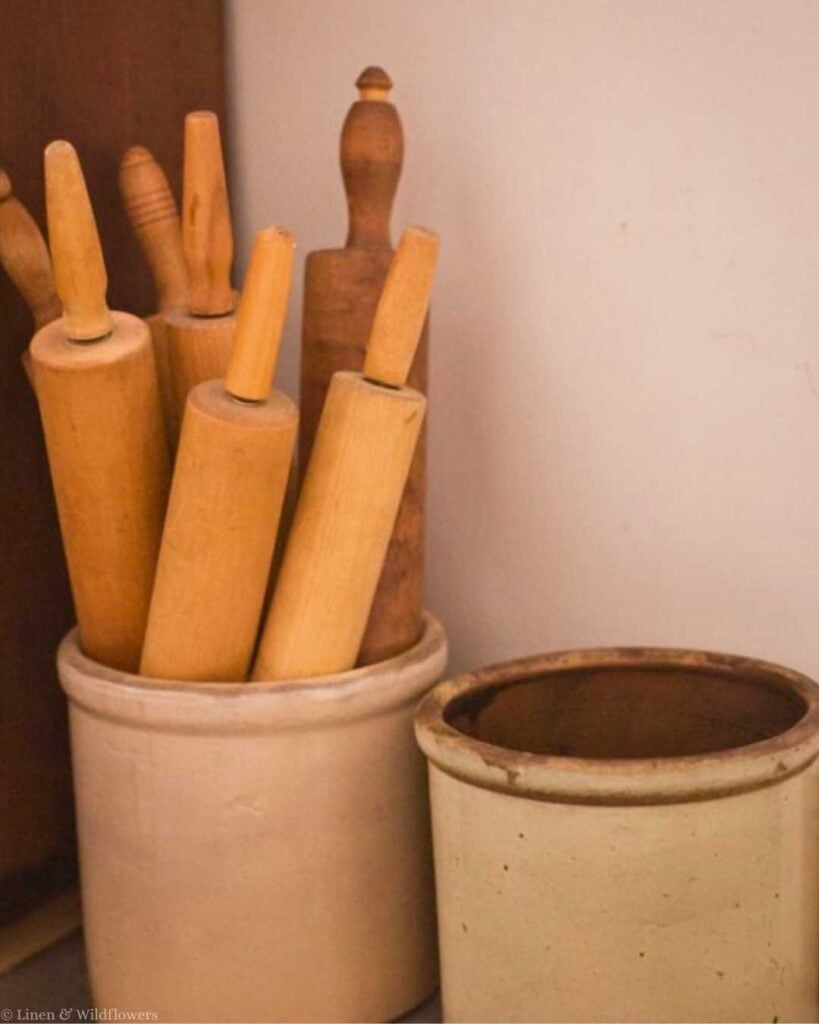
When a Stained Interior Is Actually Charming
Not every stain is a flaw.
Old crocks were used for:
- Pickling
- Fermenting
- Butter storage
- Salt curing
A lightly stained interior can signal authentic use, and I personally love that history. It tells a story.
However, I avoid:
- Strong odors
- Mold staining
- Black interior cracks
A soft tan or gray discoloration is characteristic.
Thrifting Tips: How to Spot a Good Antique Crock in the Wild
When I’m thrifting, here’s my quick checklist:
- Flip it over
- Check for cracks
- Feel the weight
- Look for cobalt markings
- Inspect glaze texture
- Check the rim for chips
And most importantly, don’t rush. Good pieces are usually hiding behind modern decor.
“What I’d Pay” Antique Crock Pricing Guide
This is based on my personal thrifting experience:
Small (1–2 gallon) crock
- $5–$25 at thrift stores
- $25–$60 in antique shops
Medium (3–5 gallon) crock
- $20–$75 depending on condition
- More if it has a strong cobalt decoration
Large (6+ gallon) crock
- $50–$150+
- Higher for rare makers or lids
I personally, get excited if I find:
- A marked crock under $20
- A larger one under $50
- Any authentic antique under $10 (automatic yes)
Condition always matters. A cracked $5 crock isn’t always a deal, but a solid $25 marked piece can absolutely be worth it.
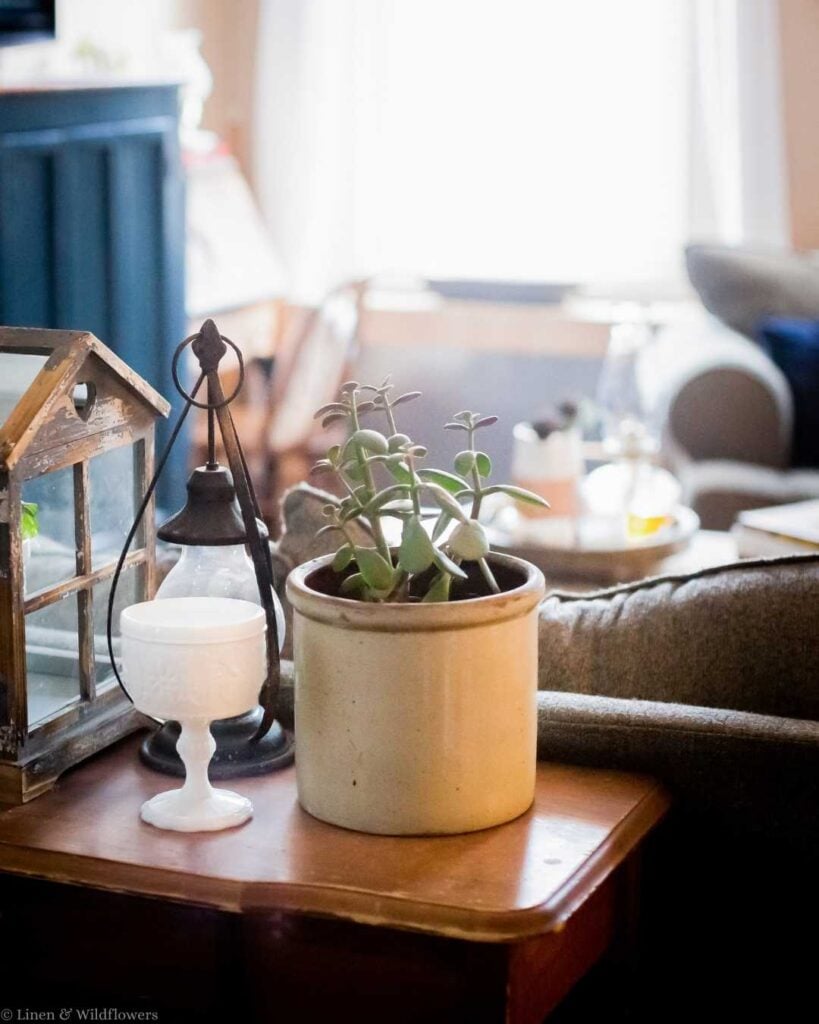
Crock With Lid vs. Without Lid: Why It Matters
When it comes to value, one of the biggest questions is:
Does it have the original lid?
An antique crock with a lid is typically worth much more than the same piece without one. Because lids were often broken or lost over time, complete sets are harder to find, and collectors notice.
How to Tell if a Crock Lid Is Original
Here’s what I quickly check:
- Proper fit – It should sit securely and look proportional.
- Matching glaze – The color and finish should closely match the crock.
- Similar wear – The lid and crock should show comparable aging.
- Weight & thickness – Original lids usually feel substantial, not lightweight.
If the crock shows age but the lid looks brand new, it’s likely a replacement. Does a Lid Really Increase Value? Yes, often significantly.
For example:
- A 3-gallon crock without a lid might sell for $40–$60.
- The same crock with its original lid could sell for $75–$125+, depending on maker and condition.
Replacement lids are fine for decorating, but they usually lower resale value.
If I find a crock with what appears to be its original lid at a thrift store for under $25, I pay close attention; complete pieces are simply harder to come by.
Where to Find Antique Crocks
- Antique malls
- Thrift stores
- Estate sales
- Farm auctions
- Facebook Marketplace
More Posts You’ll Fancy!
Frequently Asked Questions
Final Thoughts
Learning how to spot a good antique crock makes thrifting more intentional, and honestly, more fun. Once you know what to look for, you’ll start noticing quality immediately.
And there is nothing better than spotting a true antique stoneware crock on a dusty bottom shelf for under $20. That little thrill never gets old.

Homemaking Made Easy: 5 Days to a Cozy & Organized Home
This FREE course is for anyone who wants to create a warm, welcoming space, without the overwhelm. Whether you’re just starting out or need a reset, this 5-day journey will walk you through simple steps to make your home feel more peaceful, functional, and you.
It includes:
- Daily Email Lessons
- Printable Freebies
- Easy-to-Follow Tasks
By the end of the 5 days, you’ll feel more at peace, in control, and inspired in your home.